
Why Children Often Follow Cutting Practice More Smoothly When the Paper Turns Instead of the Scissors Traveling Too Far
Cutting practice looks simple from an adult point of view, but it asks children to manage several difficult things at once. They have to open and close the scissors with control, hold the paper with the other hand, follow a line, keep the body steady, and adjust direction without losing the shape. Many children become frustrated when the scissors wander off course, stop suddenly, or chew unevenly through the page. Education specialists generally note that children often follow cutting practice more smoothly when the paper turns instead of the scissors traveling too far because the task becomes more controlled and easier for small hands to manage. In many homes, the difficulty is not that the child cannot cut at all. The difficulty is that the child is trying to steer the wrong part of the task too much.
This matters because early scissor skills support far more than crafts. They help build hand strength, bilateral coordination, visual control, patience, and school-readiness confidence. Development guidance often suggests that children do better when adults teach cutting as a partnership between both hands: one hand opens and closes the scissors in a steadier forward pattern, while the other hand helps rotate the paper into the correct position. Over time, this simple shift can make cutting practice calmer, more accurate, and much less discouraging.
Cutting Requires Two Hands to Do Different Jobs at the Same Time
Adults often forget how complex cutting really is because the skill has become automatic. For children, it is a demanding coordination task. One hand controls the scissors. The other hand manages the page. The eyes track the line. The brain keeps all three working together. If one part slips, the whole task can quickly feel hard.
Child development specialists generally explain that scissor use depends on strong bilateral coordination, which means both sides of the body working together in different but connected ways. In many families, children struggle not because they lack effort, but because they are still learning how these two hand jobs fit together.
Many Children Try to Steer With the Scissors Alone
A common early pattern is that children attempt to do almost all the directing with the scissor hand. They move the scissors widely across the paper, twist the wrist, or try to force the blades around corners while the paper stays mostly still. This often makes the line harder to follow. The scissors may slip, angle awkwardly, or stop cutting cleanly.
Family learning experts generally note that children often need explicit help seeing that the paper hand is supposed to guide as much as the scissor hand. In many homes, cutting becomes easier once the child understands that the scissors do not need to do all the steering work alone.

Turning the Paper Often Makes the Cutting Path Easier to See
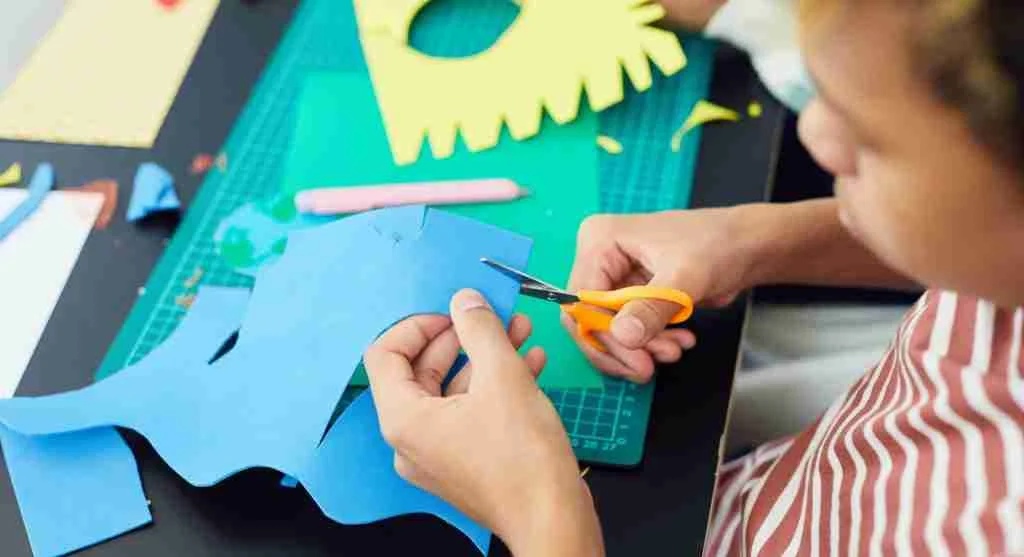
When the paper turns gradually, the cutting line stays in a more workable position in front of the child. Instead of forcing the scissors into awkward angles, the child can continue making smaller, steadier cuts while the line is brought into place by the supporting hand. This often helps the eyes track the path more clearly too.
Development specialists generally explain that children perform better when the visual path of a task remains easier to scan. In many homes, paper-turning improves cutting because the child can keep the line in a more visible and manageable direction rather than chasing it with the scissors.
Children Often Stay Calmer When the Scissor Hand Does Not Feel Out of Control
Once scissors start twisting too much, many children feel the task slipping away from them. The grip gets tense, the cuts get jagged, and frustration rises quickly. Turning the paper instead can help the scissor hand feel more stable. The motion becomes more predictable, which often reduces panic and helps the child keep going.
Child behavior experts generally note that children often tolerate learning tasks better when the body feels more in control from the beginning. In many homes, this is why paper-turning improves mood as well as accuracy. The task simply feels less wild in the hands.
The Paper Hand Often Needs More Attention Than Adults First Realize
Parents usually watch the scissors closely because that is where the actual cutting happens. Yet the supporting hand is doing just as much invisible work. It must grip the page, hold it steady, rotate it gently, and keep it from bending or collapsing. If the paper hand is passive, the child often has to overwork the scissors to compensate.
Development guidance often suggests that fine motor teaching works best when adults notice both hands, not only the obvious one. In many families, cutting improves once parents begin coaching the guiding hand as actively as the cutting hand.
Curves and Corners Usually Become Easier When the Paper Moves First
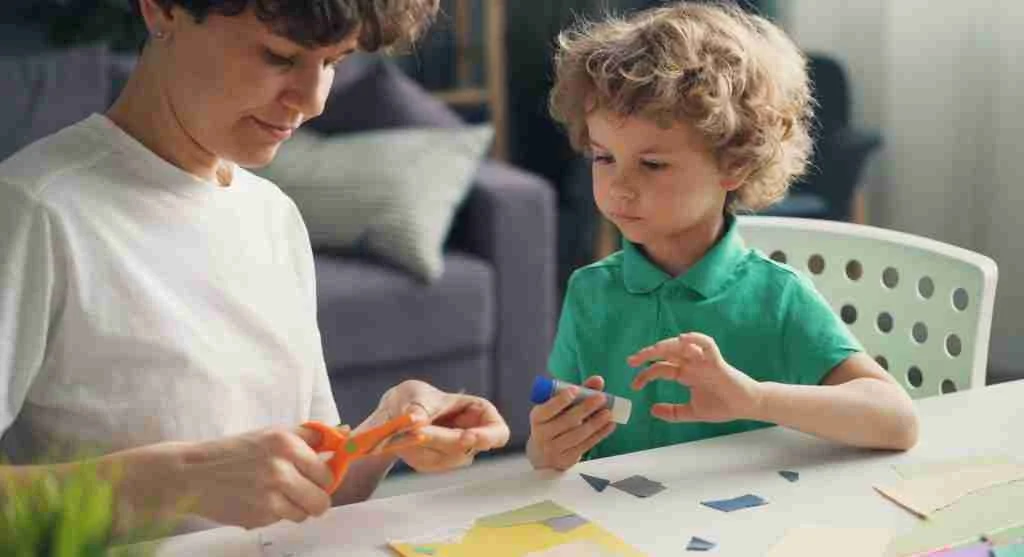
Straight lines are often the first success in cutting practice, but curves and corners create a new level of challenge. Children frequently try to swing the scissors around the bend, which can cause sharp slips away from the line. Turning the paper before each small cut often makes these shapes easier because the line is repositioned for the scissors instead of the scissors being forced into the shape all at once.
Education specialists generally note that children often handle more complex cutting lines better when the adjustment happens in the paper hand in tiny stages. In many homes, rounded shapes start improving noticeably once the child learns that the page should move more than the wrist.
This Method Often Reduces Chewed or Torn Edges
Uneven, choppy cutting often happens when the blades are pushed through the paper at poor angles or when the child keeps stopping and twisting the scissors awkwardly. A better paper position usually helps the scissors make cleaner contact. The result often looks smoother even if the child is still very new to the skill.
Family learning specialists generally note that children stay more encouraged when the work on the page starts looking closer to what they intended. In many homes, cleaner edges help motivation because the child can finally see that practice is leading somewhere recognizable.
Children Often Learn the Rhythm of Cutting Better This Way
Good cutting has a rhythm to it. Cut, guide, cut, guide, cut, guide. When children rely too much on traveling with the scissors alone, that rhythm breaks down. The motion becomes rushed or jerky. Paper-turning often restores the pattern because the child begins alternating between cutting and repositioning more naturally.
Development specialists generally explain that many fine motor tasks become easier when children can feel the repeating pattern inside the movement. In many homes, smoother rhythm is one reason paper-turning makes cutting feel less exhausting and more organized.
This Supports School Readiness Beyond Scissors Alone
Scissor practice helps children build more than one isolated classroom skill. It strengthens planning, hand separation, visual guidance, and task persistence. Learning to turn the paper instead of forcing the scissors can also teach a broader lesson: some tasks become easier when the child adjusts the setup instead of pushing harder in the same direction.
Education specialists generally note that early school-readiness activities often teach flexible problem-solving as much as physical skill. In many families, children gain confidence not only because they cut better, but because they begin understanding how to manage the task more wisely.
Parents Often Sound More Helpful When They Coach the Setup, Not Just the Mistake
Without a helpful strategy, adults often end up saying the same things during cutting practice: stay on the line, slow down, not like that, try again. Once paper-turning becomes part of the teaching, parent support often sounds more practical and less corrective. The adult is no longer only pointing out the error. The adult is showing the child how to make the task easier to succeed at.
Parenting specialists generally note that children often respond better when adults coach the structure of a skill rather than reacting only to the visible mistake. In many homes, cutting practice becomes calmer because the parent’s words start guiding the method instead of only criticizing the result.
Over Time, Paper-Turning Can Become Automatic
At first, many children need reminders to move the paper hand more actively. With practice, the motion often becomes natural. The child begins rotating the page instinctively before a corner or curve, holding it more strategically, and using smaller more controlled scissor movements. What started as a taught strategy becomes part of the child’s internal motor plan.
Child development specialists generally explain that many early fine motor supports are temporary bridges toward smoother independent skill. In many homes, paper-turning begins as a coached adjustment and slowly becomes something the child no longer has to think about consciously.
Why Children Often Follow Cutting Practice More Smoothly
Children often follow cutting practice more smoothly when the paper turns instead of the scissors traveling too far because the task becomes more stable, more visible, and easier for small hands to control. The scissor hand can keep a steadier movement while the supporting hand guides the line into place. That often reduces frustration, improves accuracy, and helps children feel more successful during fine motor learning.
In many families, better cutting practice does not come from telling children to try harder. It comes from showing them a more workable way to manage the task. Over time, this simple paper-turning habit can make scissor practice calmer, cleaner, and much more encouraging for early learners.
FAQ
Why does turning the paper help children cut better?
Because it lets the scissors stay in a steadier position while the line is guided into place, which is usually easier for young hands to control.
Does this help only with curved lines?
No. It can help with straight lines, curves, and corners, though the difference often becomes most noticeable once shapes become more complex.
Why do some children chew or tear the paper while cutting?
Often because the scissors are being twisted too much or pushed through the paper at awkward angles, which can improve when the paper is guided better.
Is this important for school readiness?
Yes. Scissor skills support hand strength, coordination, persistence, and other fine motor abilities that are useful in early classroom tasks.
Internal Linking Suggestions
Link this article to posts about fine motor practice at home, school readiness activities, easier scissor skills for children, hand-strength activities, and calm home-learning routines for preschool and early elementary children.
Key Takeaway
Children often follow cutting practice more smoothly when the paper turns instead of the scissors traveling too far because the skill becomes easier to control and easier to see. A steadier scissor hand and a more active guiding hand can reduce frustration, improve line-following, and make cutting feel more manageable. Families often support fine motor learning best by adjusting the method rather than simply asking children to be more careful. Over time, this simple change can build stronger confidence and better early school-readiness skills.