Why Children Often Leave Videos More Easily When Parents Mention the Next Scene Change Instead of the Next Minute
Many families find that ending a video is more difficult than expected. A child may happily watch a show without any issues, only to become upset as soon as a parent announces there is one minute left or that it is time to turn the device off. Family media specialists often explain that children tend to leave videos more willingly when parents refer to the next scene change instead of the next minute. That is because children usually experience videos as continuous stories rather than activities measured by the clock. In many homes, the attachment is not just to the screen itself but to the part of the story that still feels unfinished.
This difference matters because most adults naturally rely on time warnings. Saying “five more minutes,” “two more minutes,” or “one more minute” makes sense from an adult perspective because daily routines are built around schedules. Children, however, often experience videos differently. They are paying attention to how a conversation ends, when a song finishes, how a problem is solved, or when a scene reaches its conclusion. Child development guidance commonly suggests that transitions become smoother when parents align the end of screen time with the way children are actually experiencing the content. Over time, using a scene change as the stopping point can reduce conflict and make ending a video feel much more complete.
Videos Often Feel Continuous to Children, Not Divided by Clock Time
Adults are usually focused on what comes next outside the screen. Dinner will be ready soon. Bath time is coming. Bedtime is getting close. Children watching a video are often focused on what is happening inside the story. They are following the characters, music, excitement, humor, or tension. Because of that, a one-minute warning may not mean much to them. They are not measuring the experience in minutes. They are measuring it by whether the current part of the story feels finished.
Child development specialists generally explain that children transition more easily when adults understand the natural rhythm of the activity. In many families, a time warning sounds reasonable, but it does not feel meaningful because it is disconnected from what the child is actually watching.
A Scene Change Often Feels Like a More Natural Exit Point
When a parent says, “We’ll stop after this scene changes,” the ending often becomes much easier for a child to understand. A scene change is something they can actually see. They know what to watch for, and it creates a clear point where the story naturally pauses. That often feels much fairer than stopping in the middle of a conversation or action that still feels unfinished.
Family routine experts generally note that children handle transitions better when they can clearly recognize the finish line. In many homes, children become calmer because the stopping point is no longer vague or abstract. Instead, it is a visible moment on the screen that signals the story has reached a natural pause.
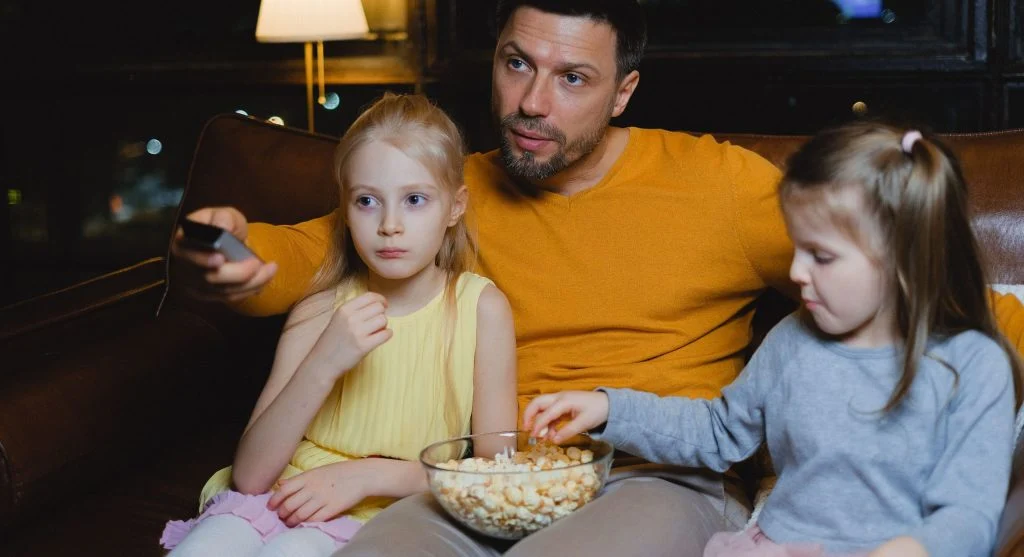
Children Often Get Upset When the Story Feels Cut, Not Completed
Many difficult screen-time endings happen not because children want unlimited time, but because the story feels interrupted. A character may still be talking. A song may still be building toward its ending. A joke may not have reached its punchline yet. Even if a parent’s one-minute warning is technically accurate, turning the device off before the emotional moment finishes can leave a child feeling interrupted instead of supported through the transition.
Development specialists generally explain that children often react more strongly when emotional experiences are left incomplete. In many families, ending screen time at a scene change reduces protests because the child is leaving at a point that feels complete enough to accept.
Scene Changes Help the Child Predict the Ending More Clearly
One reason this strategy often works is that it makes the ending easier to predict. Many children have little sense of what one minute actually feels like while watching a fast-moving or highly engaging video. A scene change, however, is much easier to recognize and anticipate. They can see the conversation end, the location change, the music stop, or the visual transition appear.
Family communication specialists generally note that children cooperate more willingly when they have a clear picture of what the ending will look like. In many homes, referring to the next scene change gives children a more reliable way to prepare for what is about to happen.
This Approach Often Reduces Last-Minute Bargaining
Parents frequently hear familiar protests when a countdown reaches its end: “This part isn’t finished yet,” or “Just a little longer.” These responses are often not random. The child is simply trying to reach a point where the story feels complete. Choosing a scene change as the stopping point can reduce these negotiations because the child already understands what counts as the final part.
Parenting specialists generally explain that children bargain less when the rule is specific and easy to observe. In many families, saying “after this scene” works better than saying “after one more minute” because the stopping point feels connected to the experience on the screen.

Children Often Transition Better When Adults Use the Language of the Activity
Every activity follows its own natural pattern. Games have rounds or levels. Videos have scenes, songs, short segments, or clear story shifts. When adults speak using the structure of the activity itself, children often understand the transition more easily. Instead of talking only from the outside, parents are working within the way the child is already experiencing the activity.
Child development experts generally explain that transitions improve when adults match the child’s focus rather than compete with it. In many families, screen-time endings become smoother because the parent feels more like a guide helping the child through the activity instead of someone abruptly interrupting it.
This Often Works Best for Short Shows, Clips, and Familiar Programs
Scene-based endings can be especially effective with videos children already know well. Familiar shows usually follow predictable patterns, such as recurring songs, short story segments, jokes, or mini-plots. Those patterns make it easier for parents to recognize a natural place to stop. Even brief video clips often include a clear pause in movement, action, or tone that provides a better ending than an arbitrary countdown.
Family media experts generally note that repeated routines become easier for children when they follow familiar patterns. In many homes, well-known programs naturally become easier to end because both parents and children begin recognizing where the calm stopping points usually occur.
Parents Often Stay Calmer When They Have a Better Ending Strategy
This approach benefits parents as well. Time-based warnings can leave adults feeling cornered if the child becomes upset at the last second. Ending after a scene change often feels more practical because parents are no longer trying to force the clock against the momentum of the story. Instead, they simply wait for a visible stopping point and confidently end the video there.
Parenting specialists generally note that a calm parent often helps create a calmer transition for the child. In many families, parents sound less abrupt and less defensive because the ending method feels consistent, reasonable, and easier to follow.
This Does Not Mean Screen Time Becomes Endless
Using scene changes does not mean allowing children to watch indefinitely while waiting for the perfect ending. Family routines and time limits still matter. Meals, schoolwork, bedtime, outings, and other daily responsibilities continue to come first. The difference is simply that the final moments of screen time are handled more thoughtfully. Parents choose a stopping point that feels more complete to the child while still keeping the family’s schedule on track.
Development guidance often suggests that children benefit most when boundaries are both clear and compassionate. In many homes, scene-based endings work because they maintain the limit without ending the activity at the most emotionally difficult moment.
Over Time, Children Often Learn That Videos Have Finishable Parts
One lasting advantage of this approach is that children gradually begin recognizing natural stopping points on their own. They learn that a show or clip is not one endless experience but something made up of parts that begin and end. With consistent practice, many children become better at hearing “this is the last scene” and mentally preparing for what comes next. Parents are not only creating smoother endings in the moment—they are also helping children build healthier transition skills over time.
Child development specialists generally explain that repeated, predictable endings help children strengthen their ability to transition. In many families, scene-based stopping points gradually become part of how children learn to step away from media with less resistance.
Why Children Often Leave Videos More Easily
Children often leave videos more easily when parents mention the next scene change instead of the next minute because scene changes match the way videos are naturally experienced. Children can clearly recognize the stopping point, feel that the current part of the story has reached a conclusion, and leave with a stronger sense of completion. That often reduces surprise, limits bargaining, and makes the end of screen time much easier to manage.
In many families, smoother screen-time transitions come not from stricter countdowns but from understanding how children experience videos in the first place. Over time, using scene changes as the stopping cue can make ending videos calmer, clearer, and easier for both children and parents.
FAQ
Why is a scene change easier for children than a one-minute warning?
Because many children experience videos through story flow rather than through clock time, so a scene change feels more meaningful and easier to predict.
Does this work for short clips as well as longer shows?
Yes. Even short clips often have visible pauses, transitions, or natural ending points that feel better than stopping in the middle of action.
Will this stop all screen-time protests?
No. Some disappointment may still happen, but many children react less strongly when the video ends at a more complete moment.
Should parents still keep overall time limits?
Yes. The goal is not to remove limits but to shape the ending more wisely so children can leave the activity more calmly.
Internal Linking Suggestions
Link this article to posts about ending screen time calmly, healthy family media habits, device transition routines, helping children with daily changes, and reducing power struggles around screens.
Key Takeaway
Children often leave videos more easily when parents mention the next scene change instead of the next minute because story-based endings fit the way children naturally experience videos. A visible scene change gives children a clearer stopping point and a stronger sense of completion. Many families find that matching the end of screen time to the structure of the activity creates calmer, smoother transitions. Over time, this simple adjustment can make ending videos much easier for both children and parents.