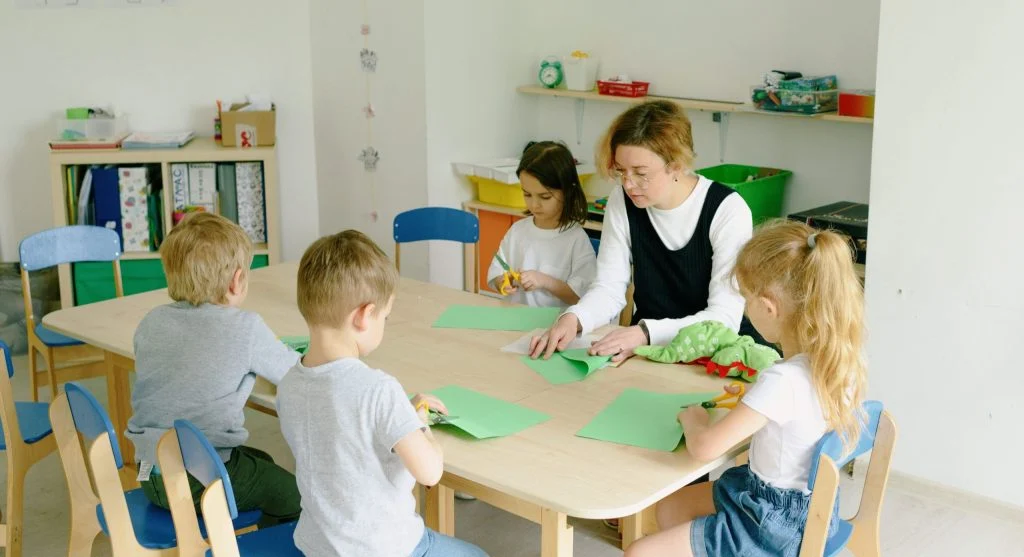
Why Children Often Follow Art and Craft Instructions Better When Supplies Arrive One at a Time
Art and craft time looks playful from the outside, but it asks children to manage many skills at once. They may need to listen, wait, choose colors, handle glue, use scissors, remember the next step, and control excitement around materials that already feel fun. When every supply is placed on the table at once, many children become scattered before the project has really begun. Education specialists generally note that children often follow art and craft instructions better when supplies arrive one at a time because the task stays organized around the current step instead of around every possible choice at once.
This matters because many adults assume craft trouble means the child is not paying attention or does not want to listen. In many homes, the real problem is overload. A child sees markers, glitter, paper, stickers, glue, scissors, ribbon, and paint all at the same time and starts responding to the materials instead of to the sequence. Development guidance often suggests that children do better when the adult controls the flow of materials so the child can focus on one action at a time. Over time, this can make creative projects calmer, clearer, and much more successful at home.
Too Many Supplies Can Turn One Project Into Ten Different Ideas
Adults usually see a finished craft in mind. Children often do not. When all the materials appear at once, the child may begin imagining many different possibilities immediately. That creativity is not a problem by itself, but it can interrupt direction-following. The child reaches for stickers before cutting, opens the markers before folding, or starts gluing pieces that were not supposed to be attached yet.
Child development specialists generally explain that young children often respond first to what is most visually exciting. In many families, this is why a simple project becomes chaotic so quickly. The table is offering too many invitations all at once, and the child is trying to answer all of them.
One Supply at a Time Keeps Attention on the Current Step
When the child receives only the material needed right now, the project feels easier to follow. If the first step needs paper, then only paper is present. If the next step needs glue, the glue appears then. This keeps the child’s attention tied to the sequence instead of pulled toward future steps or unrelated experiments.
Family learning experts generally note that children follow instructions better when the environment matches the instruction. In many homes, art projects improve quickly once the table stops competing with the adult’s directions.
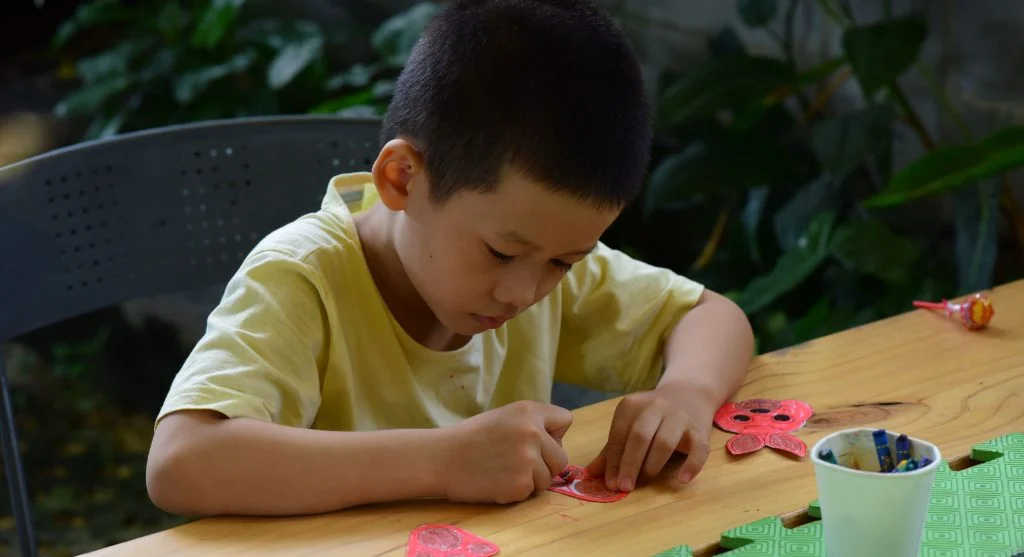
Children Often Listen Better When Choices Are Temporarily Reduced
Art materials create excitement, and excitement can weaken listening. If a child is already deciding between five colors, shaking a bottle, opening a cap, and touching beads, the adult’s voice may become background noise. Fewer visible items often lead to better listening because there is less for the child to manage mentally while hearing the next direction.
Development specialists generally note that reduced choice can support learning, especially at the beginning of a task. In many families, this does not reduce creativity. It simply protects the child’s ability to hear and follow the sequence before creativity takes over the whole activity.
This Method Can Lower Frustration Around Multi-Step Projects
Many craft projects involve order for a reason. Paper must be folded before it is cut. Glue must be used before glitter. A shape may need to dry before details are added. When children jump ahead because every material is already visible, the project can quickly stop working. Then frustration rises. The child may feel confused, disappointed, or convinced the project is too hard.
Education specialists generally explain that children often need help respecting sequence before they can enjoy the result. In many homes, one-at-a-time supply flow reduces frustration because the project is less likely to fall apart early.
Children Often Feel More Successful When the Table Looks Simpler
A crowded craft table can make a project feel larger than it really is. Young children may not know which items matter now and which will matter later. That uncertainty can make the whole task seem harder before it begins. A simpler table often makes the project feel more possible, which can improve cooperation right away.
Child behavior experts generally note that children engage more steadily when tasks look manageable. In many homes, reducing visible supplies lowers the emotional size of the activity and helps the child feel ready instead of overwhelmed.
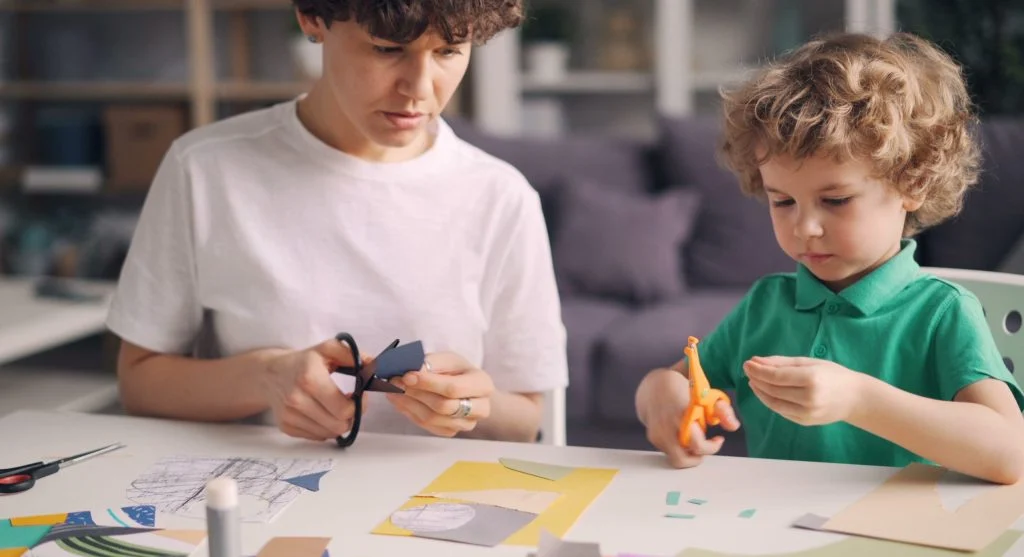
One-at-a-Time Supplies Can Support Fine Motor Practice Too
Crafts are often used to build cutting, pasting, placing, tracing, folding, and hand-control skills. These fine motor steps become harder when attention is scattered across many materials. A child may rush, grab, squeeze too much glue, or lose interest in careful hand movements because the table keeps pulling focus elsewhere.
Development guidance often suggests that fine motor learning improves when the child can stay with one physical action long enough to practice it properly. In many families, this means the project becomes not only easier to follow, but also more useful as a learning activity.
This Approach Helps Children Understand Process, Not Just Product
When all supplies are available from the start, children often focus on the final object they want to make. They may become impatient with the steps in between. By giving materials gradually, adults teach that projects unfold in order. The child begins learning that making something is a process with stages, not only an end result to rush toward.
Family learning specialists generally note that this kind of sequencing supports school readiness in broader ways. In many homes, children carry this understanding into writing tasks, science activities, and daily routines that also depend on doing one part before the next.
Parents Often Stay Calmer When They Control Material Flow
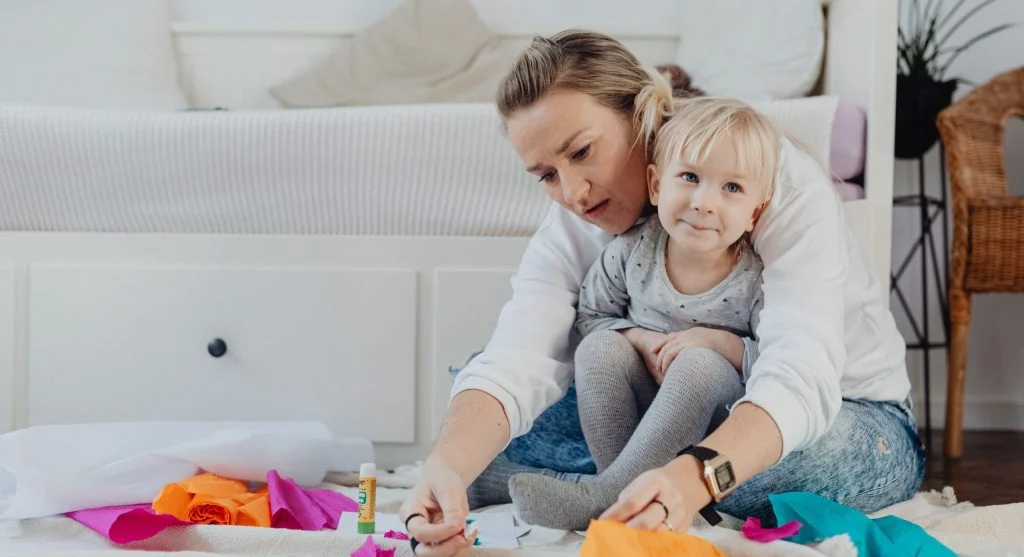
This method helps adults too. A table full of art supplies often leads to repeated correction: not yet, put that down, do not open that, wait for the next step. That kind of constant redirection can make parent tone sharper and make the whole project feel stressful. When supplies come out gradually, adults usually spend less time managing chaos and more time guiding the activity itself.
Parenting experts generally note that children respond better when adults sound steady rather than reactive. In many homes, one-at-a-time supplies improve not only child focus but also the adult’s ability to teach calmly.
Credit: www.kaboompics.com / Pexels
This Does Not Remove Creativity It Structures It
Some adults worry that controlling the material flow will make craft time too rigid. In practice, structure and creativity can work together. The child can still choose colors, add details, or personalize the project. The difference is that the creative decisions are made inside a sequence the child can manage. That often leads to more satisfying creativity, not less.
Development specialists generally explain that children often create more successfully when the process does not overwhelm them first. In many families, structure makes room for creativity by protecting the child from getting lost too early in the activity.
Over Time, Children Often Need Less Material Control
As children grow, many become better at handling a fuller set of supplies without losing the sequence. They learn to wait, plan, and keep later materials untouched until the time is right. What starts as adult-led material flow can gradually become the child’s own self-management skill.
Child development specialists generally note that independence often grows from repeated supported practice. In many homes, the one-at-a-time approach becomes a bridge toward better planning, better task organization, and calmer independent project work.
Why Children Often Follow Art and Craft Instructions Better
Children often follow art and craft instructions better when supplies arrive one at a time because the project stays organized around the current step instead of around every exciting option on the table. This reduces distraction, protects sequence, and makes each action easier to understand. The child is still being creative, but the creativity is happening inside a structure the child can manage.
In many families, smoother craft time does not come from more reminders or more correction. It comes from changing what the child sees at each moment. Over time, one-at-a-time materials can make projects calmer, more successful, and much more enjoyable for both children and parents.
FAQ
Why does giving one supply at a time help children?
It reduces distraction and keeps the child focused on the current instruction instead of on every exciting material at once.
Does this make art time less creative?
No. It usually helps creativity by giving the child enough structure to succeed with the project before getting overwhelmed.
What kinds of projects does this help most with?
It is especially useful for multi-step crafts involving glue, scissors, paper, stickers, paint, or any materials that need to be used in a particular order.
Will children always need this kind of support?
Not usually. Many children become better at managing several supplies independently once they have had repeated practice with structured project flow.
Internal Linking Suggestions
Link this article to posts about following directions at home, fine motor learning activities, school readiness through crafts, calmer homework habits, and reducing overwhelm during children’s projects.
Key Takeaway
Children often follow art and craft instructions better when supplies arrive one at a time because fewer visible materials make the sequence easier to understand and easier to follow. This simple change can reduce distraction, lower frustration, and help creative projects feel more manageable. Families often see calmer and more successful craft time when the environment supports the current step instead of competing with it. Over time, this method can build stronger focus, better task organization, and more confident learning at home.