Why Children Often Count Objects More Accurately When They Slide Each One Into a New Space Instead of Pointing Twice
Early counting often looks easier than it really is. Adults see a few blocks, buttons, toy animals, or crackers on the table and assume the child only needs to say number words in order. Yet many children skip objects, count the same item twice, lose track halfway through, or restart because they are not sure where they are in the set.
Education specialists generally note that children often count objects more accurately when they slide each one into a new space instead of pointing twice because movement creates a visible record of what has already been counted. In many homes, the child does not struggle because number words are completely unknown. The child struggles because the objects themselves are not organized in a way that protects one-to-one counting.
This matters because counting is one of the foundations of early math readiness. Children need to understand that each object gets one number word and that the final number tells how many are in the group. Development guidance often suggests that young learners do better when adults make counting physical and trackable rather than purely verbal. Over time, sliding each object into a new counted space can reduce mistakes, build confidence, and help children understand what counting is actually doing.
Counting Requires More Than Saying Number Words in Order
Many children can recite “one, two, three, four” long before they can count a real set accurately. That is because rote number order and one-to-one counting are different skills. In true counting, the child must coordinate speech, attention, eye tracking, hand movement, and object control all at once. The child is not just saying a sequence. The child is matching one spoken number to one real item each time.
Child development specialists generally explain that early counting errors often come from coordination demands rather than from a total lack of number knowledge. In many families, the child already knows some number words but still needs help connecting those words reliably to actual objects.
Pointing Alone Can Make It Easy to Lose Track
Adults often teach counting by having children point from object to object. This can work, but it also leaves room for confusion. A child may touch one item lightly, swing the finger back, hesitate, or point at two objects in a quick blur. Once the finger moves away, there may be no clear sign of which objects were already counted and which are still waiting.
Family learning experts generally note that young children often benefit when counting leaves behind a visible result. In many homes, pointing alone causes mistakes because the child has no physical record of progress once the hand moves on.
Sliding an Object Creates a Clear “Counted” and “Not Counted” Difference
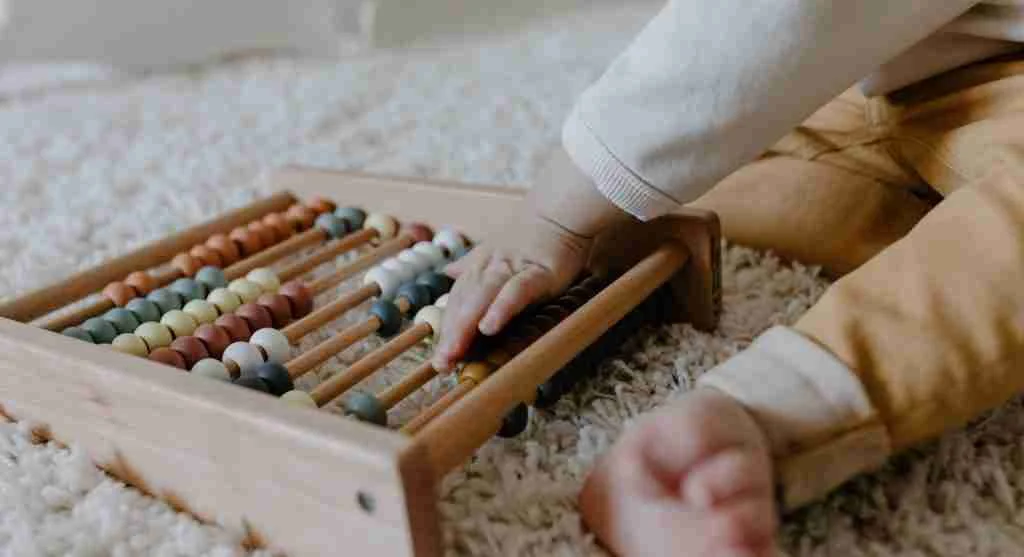
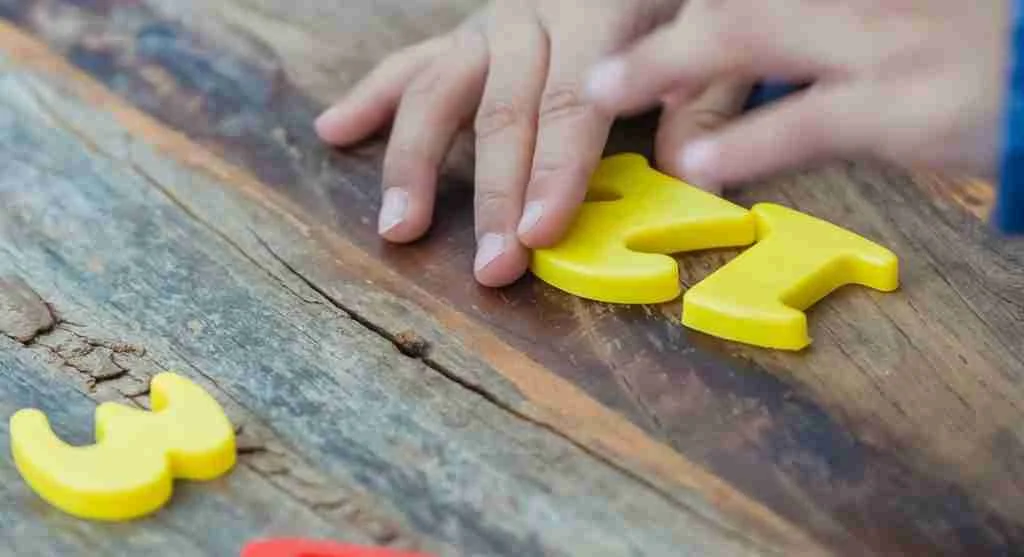
When a child moves each object from one area into another, the counting task becomes much clearer. One side of the table holds the objects not yet counted. The other side holds the ones already counted. This simple physical separation gives the child two strong supports at once: a clearer next object to count and a visible reminder of what has already been done.
Development specialists generally explain that children often perform better when abstract thinking is supported by concrete organization. In many homes, sliding objects into a new space improves accuracy because the child no longer has to remember everything internally. The table itself starts holding part of the structure.
Movement Helps One-to-One Correspondence Make More Sense
One-to-one correspondence is the idea that each object gets one number word. Sliding each item while saying a number can strengthen that connection. The child sees and feels that one object moves with one spoken number. That physical pairing often makes the counting process less slippery and more meaningful.
Education specialists generally note that early math learning often becomes stronger when children can see a direct action attached to the idea. In many families, moving the objects helps because each number word now clearly belongs to one visible change on the table.
Children Often Count More Calmly When the Set Becomes More Organized as They Go
A scattered group of objects can make counting feel bigger than it is. Children may rush, grab at items, or feel unsure where to begin. Sliding each object into a new place gradually creates order. The workspace becomes calmer as the count moves forward. That often helps the child feel more successful and less overwhelmed.
Child behavior experts generally explain that children engage better with learning tasks when the visual environment grows clearer instead of messier. In many homes, counting improves because the activity becomes easier to manage with every move rather than harder.
This Method Often Reduces Double Counting
One of the most common early counting mistakes is counting the same object twice. This happens easily when the object stays in the same cluster after being touched. A child may glance back, forget whether that item was already used, and count it again. Sliding objects into a separate counted group reduces this risk because the used items are no longer mixed with the untouched ones.
Development guidance often suggests that children benefit when adults design tasks to prevent common mistakes rather than correcting those mistakes after the fact. In many homes, this method works well because it quietly removes one of the biggest traps in early counting.
It Also Helps Children Notice When They Skipped an Object
Skipping is another common counting problem. A child may say all the right number words while accidentally jumping over one button or toy in the row. When objects are moved one by one, skipped items stand out more clearly. If something remains behind on the uncounted side, both child and adult can see that the set is not finished yet.
Family routine experts generally note that children often learn more from visible structure than from repeated verbal correction. In many homes, the remaining uncounted object becomes a quiet and powerful teaching cue without needing a long explanation.
Children Often Understand the Final Number Better When They See the Whole Counted Group Together
One important early math idea is cardinality — understanding that the last number said tells how many objects are in the set altogether. Sliding objects into one counted group can support this concept. At the end, the child can look at the completed group and connect the final spoken number to the whole collection now sitting together in the counted space.
Development specialists generally explain that children often need help seeing that counting is not only a process but also a result. In many families, the final grouped set makes the answer feel more real because the counted objects now visibly belong together.
This Works Well With Everyday Household Items
Parents do not need special math materials for this to work. Crackers, coins, toy cars, building blocks, craft pom-poms, bottle caps, or spoons can all become counting objects. The key is not the object itself. The key is the structure: one place for not-yet-counted items and one place for counted items.
Education specialists generally note that the best home-learning strategies are often easy enough to use in ordinary life. In many homes, this counting method feels more natural because it can be practiced at the table, in the kitchen, during play, or while cleaning up without becoming a heavy lesson.
Parents Often Teach More Calmly When the Objects Carry Part of the Structure
This method can help adults too. Without a strong structure, parents often keep saying the same things: slow down, not that one again, you skipped one, start over, count carefully. When the objects are being moved into a new space, the table begins carrying some of that structure. The adult can guide more calmly because the activity itself helps show the child what is happening.
Parenting specialists generally note that children often learn better when adults do not need to correct every small step verbally. In many homes, counting becomes less frustrating because the physical setup supports the lesson instead of making the parent do all the organizing through speech.
This Strategy Can Build Toward More Independent Counting Later
At first, many children need the visible counted space to stay accurate. With practice, they often begin internalizing the pattern. They get better at tracking one object per number and eventually may not need to move every item physically. The sliding method is not a permanent requirement. It is often a bridge toward stronger internal one-to-one correspondence.
Child development specialists generally explain that many early math supports begin as concrete actions before becoming mental habits. In many families, sliding objects provides exactly the kind of bridge children need before more independent counting becomes reliable.
Why Children Often Count Objects More Accurately
Children often count objects more accurately when they slide each one into a new space instead of pointing twice because movement creates a clear record of what has already been counted and what is still waiting. The child does not have to rely only on finger memory or visual guesswork. That often reduces double counting, missed objects, and confusion during early math practice.
In many families, stronger counting does not begin with louder number drills. It begins with better structure around real objects. Over time, this simple move-and-count method can strengthen one-to-one correspondence, improve confidence, and support the early math skills children need for later learning.
FAQ
Why do children count the same object twice?
Often because once an object has only been pointed at, it still looks like part of the original set, making it easy to lose track of whether it was already counted.
Why does sliding objects help counting?
It creates a clear counted group and uncounted group, which makes one-to-one correspondence easier to see and follow.
Does this only work for preschoolers?
It is especially useful for young children, but older beginners who struggle with one-to-one counting can benefit too.
Can parents use household items instead of math toys?
Yes. Many everyday objects work well as long as the child can move them one by one into a separate counted space.
Internal Linking Suggestions
Link this article to posts about early math at home, school readiness counting skills, simple number activities for children, one-to-one correspondence practice, and hands-on learning ideas for preschool and kindergarten.
Key Takeaway
Children often count objects more accurately when they slide each one into a new space because the action makes counting visible, organized, and easier to track. This simple method can reduce double counting, reveal skipped items, and strengthen one-to-one correspondence at the same time. Families often improve early math learning by making it more concrete instead of more verbal. Over time, moving objects while counting can help children build stronger accuracy and more confidence with numbers at home.