Why Children Often Start Noticing Social Embarrassment in Others Before They Can Manage Their Own Smoothly
Many parents first notice this developmental shift in an unexpected way. A child suddenly reacts when someone says the wrong thing, tells a story too loudly, sings at the wrong moment, spills something in front of others, or makes a social mistake in public. The child may cringe, stare, laugh nervously, whisper about it later, or look deeply uncomfortable. Yet that same child may still struggle badly with managing personal embarrassment when it happens to them.
Child development specialists generally note that children often start noticing social embarrassment in others before they can manage their own smoothly because recognition of awkwardness can develop earlier than emotional recovery from awkwardness. In many homes, this stage looks contradictory, but it often reflects real social growth rather than inconsistency.
This matters because adults may assume that a child who notices embarrassment in other people should automatically know how to handle it when the same feeling appears in their own life. Development guidance often suggests that these are related but different abilities. One is about spotting social tension from the outside. The other is about staying steady inside it. Over time, understanding this pattern can help families respond more calmly when children seem unusually reactive to awkward moments in others while still falling apart over small embarrassing experiences of their own.
Children Often Detect Social Awkwardness Before They Know What to Do With It
One important part of development is becoming more aware of how people affect one another socially. Children begin noticing tone, timing, reactions, facial shifts, and moments when something seems off. That awareness can make them quick observers of embarrassment. Yet noticing a social discomfort does not automatically include knowing how to respond to it well.
Child development experts generally explain that social detection and social regulation often grow at different speeds. In many families, the child clearly senses an awkward moment before having a mature plan for handling what that awareness means emotionally.
Watching Embarrassment in Others Can Feel Easier Than Surviving It Personally
From the outside, embarrassment is often easier to observe than to endure. A child watching someone else experience an awkward moment has some emotional distance. The child may feel discomfort, but is not fully trapped inside the event. Personal embarrassment is different. It lands directly in the body, often with heat, shame, confusion, and a sudden urge to hide, deny, or escape.
Family communication specialists generally note that children may understand social discomfort as observers before they can regulate it as participants. In many homes, this is why a child can identify awkwardness in someone else while still becoming flooded by even a small personal mistake.

Social Awareness Often Grows Before Emotional Recovery Skills
As children become more aware of how people appear in front of others, they start noticing mistakes in a new way. They see when someone talks too long, draws attention unexpectedly, breaks a social rhythm, or does something that makes the room feel uncomfortable. That growing awareness is important. But emotional recovery skills such as laughing gently, staying calm, moving on, or tolerating one’s own awkwardness often take longer to develop.
Development specialists generally explain that many emotional milestones arrive unevenly. In many families, children first become more socially alert and only later become more resilient inside the feelings that alertness creates.
Children Often React Strongly Because They Are Imagining Themselves in the Same Position
One reason awkward moments in others can feel so intense is that children may partly imagine themselves in that same situation. Watching another person get something wrong can activate the child’s own fear of being seen that way. The discomfort is not only empathy. It may also be self-protection: a silent internal reaction of “What if that happened to me?”
Child behavior experts generally note that strong responses to other people’s embarrassment often contain both outward awareness and inward anxiety. In many homes, the child’s cringing reaction reflects growing social comparison as much as simple observation.
This Stage Often Appears When Children Care More About Social Image
Children usually become more sensitive to social image gradually. As this happens, they care more about how behavior looks, how mistakes land, and how other people react. That can make embarrassment in others feel sharper because the child is no longer only seeing the action. The child is seeing the action through the lens of how it may be judged.
Parenting specialists generally note that this stage often appears alongside growing seriousness about fitting in, seeming competent, and avoiding negative attention. In many families, children become more visibly reactive to awkwardness right around the time social image starts mattering more deeply.
Children May Sound Critical Before They Become Compassionate About Embarrassment
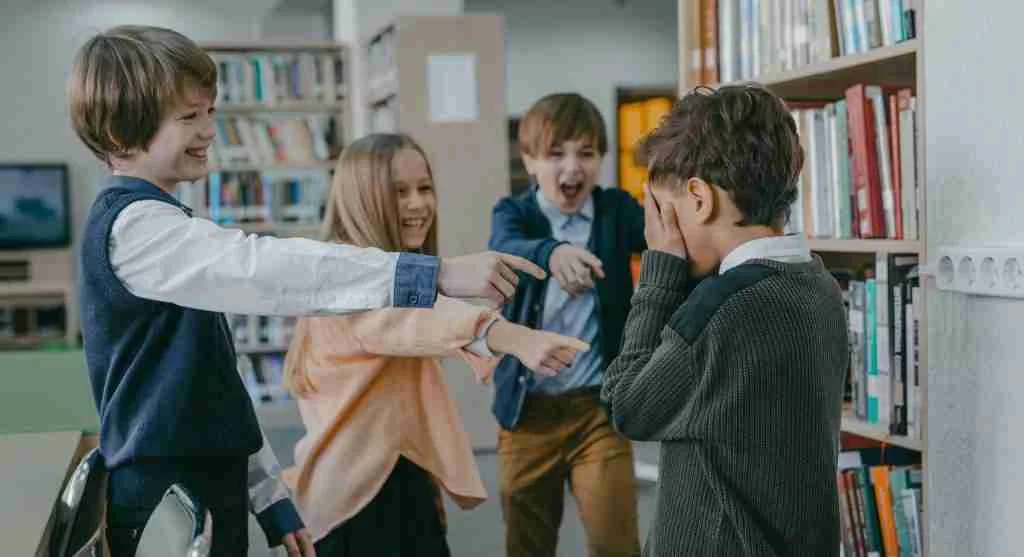
Adults sometimes feel surprised when children comment sharply on another person’s awkward moment. A child might say someone looked silly, did something weird, or should not have said that. This can sound unkind, but it often reflects a rough early stage of social understanding. The child notices the mistake before fully developing the compassionate language to hold that awareness gently.
Development guidance often suggests that children often become blunt observers before they become graceful interpreters. In many homes, strong comments about someone else’s embarrassing moment are less about cruelty and more about a new awareness that is still socially immature.
Children Often Need Help Understanding That Everyone Has Awkward Moments
One major part of emotional growth is learning that awkwardness is not rare, permanent, or identity-defining. Children do not always know this yet. They may experience embarrassment, whether personal or observed, as a much bigger event than adults do. That can make them highly reactive to moments that seem small in a more mature social perspective.
Child development specialists generally explain that children often need repeated experience before they understand how normal social missteps are. In many families, stronger calm develops once children begin seeing embarrassment as part of being human rather than as proof that something is terribly wrong.
Parents Often Help Most by Staying Small Around Awkward Moments
Adults can unintentionally enlarge embarrassment by overreacting, overexplaining, teasing publicly, or rushing to fix the moment too intensely. A calmer response often helps children most. If an awkward moment in someone else happens, the adult’s steadiness can teach that social discomfort does not always require alarm. If the awkward moment happens to the child, the same steadiness can teach that recovery is possible.
Family relationship specialists generally note that children learn how big embarrassment is partly by watching how adults size it. In many homes, children become less overwhelmed over time when parents treat everyday awkwardness as survivable instead of dramatic.
This Stage Can Be an Early Sign of Growing Empathy
Although the child may not handle it gracefully yet, noticing embarrassment in other people can also reflect developing empathy. The child is beginning to register that another person is having an uncomfortable social experience. That awareness is important. It may show up through clumsy reactions at first, but it can later grow into tact, gentleness, and deeper social understanding.
Development specialists generally explain that empathy often starts in incomplete forms. In many families, what looks like exaggerated discomfort about another person’s awkwardness may contain the early outline of caring about how others feel in social spaces.
Children Usually Grow Into Better Management of Their Own Embarrassment Later
Most children do not stay equally fragile around embarrassment forever. Over time, many begin learning that awkward moments pass, that other people recover too, and that one uncomfortable incident does not define a whole relationship or identity. As this understanding grows, both observed embarrassment and personal embarrassment often become easier to tolerate.
Child development experts generally note that recovery from embarrassment depends on repeated real-life practice, not only on explanation. In many homes, children become steadier not because they stop noticing awkwardness, but because they become more experienced at moving through it without panic.
Why Children Often Start Noticing Social Embarrassment in Others
Children often start noticing social embarrassment in others before they can manage their own smoothly because social awareness of awkwardness often develops earlier than emotional recovery skills. They begin detecting when someone looks exposed, uncomfortable, or socially off before they have enough resilience to handle the same feeling calmly in themselves. That can make their reactions look uneven even though real growth is taking place.
In many families, understanding this stage helps adults interpret children more fairly. What looks like inconsistency often reflects an important developmental transition: the child is becoming more socially aware but is still learning how to live with what that awareness feels like. Over time, that early noticing can grow into stronger empathy, greater tact, and better management of personal embarrassment too.
FAQ
Why does my child react so strongly when someone else is embarrassed?
Often because the child is becoming more socially aware and may also be imagining how uncomfortable that same situation would feel personally.
Why can my child notice embarrassment in others but still melt down over their own mistakes?
Because noticing awkwardness and emotionally recovering from awkwardness are different skills, and they often develop at different speeds.
Is this a normal stage of development?
Yes. Many children become more aware of social embarrassment before they become skilled at managing it calmly in themselves.
Will this usually improve over time?
Often yes. As social understanding, empathy, and emotional recovery skills grow, many children handle embarrassment more smoothly overall.
Internal Linking Suggestions
Link this article to posts about child emotional development, handling embarrassment in children, social confidence, perspective-taking, and calm family communication during awkward moments.
Key Takeaway
Children often start noticing social embarrassment in others before they can manage their own smoothly because social awareness usually develops before emotional recovery skills do. Many children first become alert to awkwardness from the outside before they know how to stay steady inside it themselves. Families often help most by treating awkward moments calmly and showing that social discomfort is survivable. Over time, this stage can support stronger empathy, better self-understanding, and more mature social confidence.