Why Children Often Feel More Relaxed When a Family Tradition Ends the Day the Same Way
Families often think of traditions as things tied to holidays, weekends, or big celebrations. But some of the strongest family rituals happen quietly at the end of normal days. A short walk, a shared bedtime snack, evening tea, one story on the sofa, or a simple check-in conversation can become deeply meaningful when it happens again and again. Family relationship specialists generally note that children often feel more relaxed when a family tradition ends the day the same way because repeated endings help children settle emotionally and trust that family closeness will return in a familiar pattern. In many homes, the real power of the tradition comes less from the activity itself and more from the fact that it reliably closes the day.
This matters because children are often most tired, sensitive, and emotionally stretched at the end of the day. Even a good day can leave them mentally full. A harder day may leave them carrying disappointment, overstimulation, or leftover tension into the evening. Development guidance often suggests that a repeated end-of-day family tradition can help children move out of that unsettled state by giving them one dependable emotional landing place. Over time, these small evening rituals often help children feel more secure, more connected, and more ready to settle into rest.
Children Often Need a Predictable Emotional Landing Place at Night
Adults may see evening mostly in practical terms. Dinner gets finished, the house becomes quieter, bedtime begins, and the day comes to a close. Children often experience evening in a more emotional way. Tiredness can make feelings stronger, patience shorter, and transitions more difficult. A repeated family tradition at the end of the day can help because it gives children a familiar emotional landing place at the time they often need it most.
Family specialists generally note that children relax more easily when the day does not simply stop, but closes in a recognizable way. A child may not be able to explain this directly, but often feels steadier when the end of the day includes one familiar family moment that returns again and again. In many homes, this dependable closing ritual helps the whole evening feel softer.
Repeated Endings Help Children Understand That the Day Is Settling
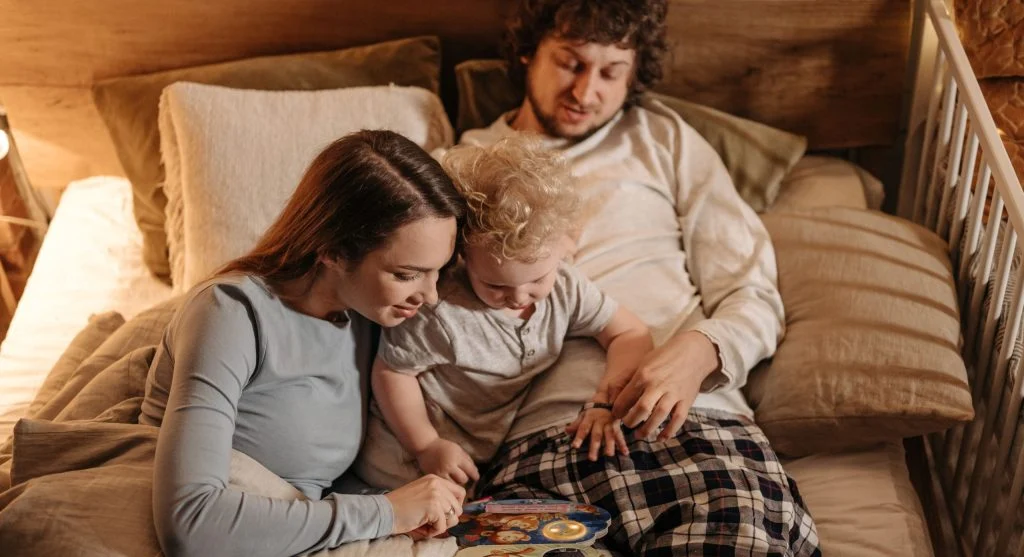
Children often benefit from signals that help them understand what part of the day they are in. Just as repeated morning cues can help a day begin, repeated evening cues can help it end. A family tradition that always happens near bedtime can make that shift easier to recognize. The child begins to learn not only what the activity is, but what it means. It means the day is slowing down, connection is happening, and rest is coming next.
Child development specialists generally note that children use repeated patterns to understand time and transitions. In many families, a small nightly ritual becomes one of the clearest signs that daytime demands are over. That clarity often helps children feel more settled because the end of the day no longer feels vague or sudden.
Children Often Relax More in Familiar Emotional Spaces
One reason repeated evening traditions matter so much is that children usually know how those moments feel. The tone is familiar. The steps are familiar. The expectations are lower and easier to predict than in many other parts of the day. That emotional familiarity can reduce stress because the child does not have to adjust to something new while already tired.
Family relationship experts generally note that repeated calm spaces often carry more emotional value than adults realize. A child who spends the day managing demands may soften quickly during a familiar evening ritual because the body and mind no longer have to stay so alert. In many homes, this is one reason a simple nightly tradition can become more meaningful than a larger occasional event.
Evening Traditions Often Help Carry Children Out of Busy Thinking
Children do not always stop thinking just because the clock says bedtime. School moments, sibling problems, unfinished wishes, or overstimulating experiences can stay active in a child’s mind. A repeated family tradition at the end of the day can help shift attention away from that busy inner activity. The ritual gives the child something familiar and grounding to focus on instead.
Development specialists generally note that children often regulate better when attention has somewhere safe to land. A familiar song, a shared question, one small game, or a bedtime reading pattern can provide that landing place. In many homes, children seem calmer not because they have forgotten the day, but because the ritual has helped them move into a steadier state.
Children Often Feel Closer When Connection Happens Without Pressure
One quiet strength of repeated evening traditions is that they often make connection feel easy instead of forced. A family does not need to create a deep emotional conversation every night for closeness to happen. Sometimes children feel most connected when they simply know the family will sit together, read together, talk briefly, or follow one familiar comforting pattern before bed.
Family communication specialists generally note that low-pressure repeated connection often supports trust better than occasional intense effort. In many families, children open up most naturally when closeness is woven into an ordinary routine. An evening tradition can do exactly that by making connection part of what always happens as the day ends.