Why Children Often Seem More Bossy Right Before They Learn How to Organize Other Children More Cooperatively
Many parents go through a stage where a child suddenly sounds much more controlling in social play. The child tells others where to sit, what role to play, how to build something, which rule to follow, and what should happen next. This can sound rude, inflexible, or overly forceful. Yet child development specialists generally note that children often seem more bossy right before they learn how to organize other children more cooperatively because leadership awareness often develops earlier than social flexibility. In many homes and play settings, the child is beginning to notice how group activity can be shaped, but does not yet have the skills to guide others with warmth, negotiation, or tact.
This matters because adults can easily assume the child is simply becoming controlling. Sometimes the tone does need guidance, but development guidance often suggests that this stage can also reflect growth. The child is learning about order, planning, roles, and shared activity. The problem is that the child often discovers how to direct before learning how to invite. Over time, understanding this stage can help parents respond in ways that support stronger social leadership instead of reacting only to the roughness of the moment.
Bossy Behavior Often Appears When Children Start Understanding Group Structure
Very young children often play side by side or focus mainly on their own actions. As development progresses, many children begin noticing that group play has patterns. Someone decides the game. Someone sets the rule. Someone chooses who goes first. Someone keeps the story of the play moving. This new awareness can be exciting. It can also come out in blunt ways.
Child development experts generally explain that bossy behavior often increases when children first recognize that play and group activities can be organized intentionally. In many families, the child is not only trying to control others for its own sake. The child is discovering that people can coordinate, and is trying out that power in a rough early form.
Children Often Learn “How to Lead” Before They Learn “How to Include”
Leadership and inclusion are not the same skill. A child may quickly learn how to generate ideas, assign roles, and push a game forward. That does not mean the child yet knows how to consider other people’s preferences, tolerate disagreement, or leave room for others to shape the activity too. This is one reason bossiness can rise before true cooperation does.
Family behavior specialists generally note that many children first experience the pleasure of directing before they fully understand the social responsibility that comes with it. In many homes, a child sounds bossy because the child has discovered the force of initiative but not yet the balance of shared control.
Bossiness Can Be a Sign That the Child Is Thinking Beyond Solo Play
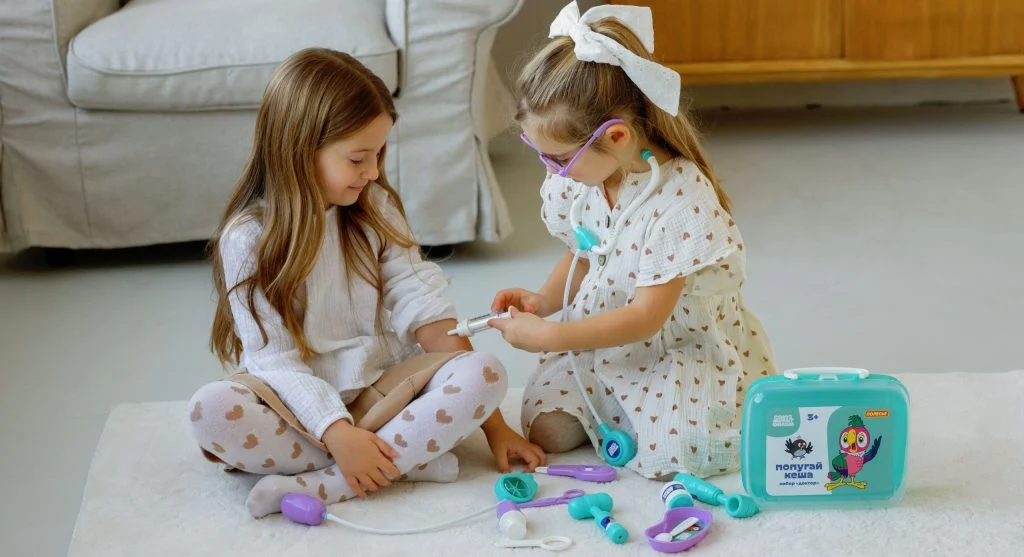
Although bossy behavior can be tiring, it often reflects an important social shift. The child is no longer only immersed in personal activity. The child is paying attention to what the other children are doing and trying to create a coordinated experience. The method may be awkward, but the social thinking underneath it can be more advanced than it first sounds.
Development specialists generally explain that children often move through a stage of clumsy leadership as they shift from isolated play toward more organized social play. In many settings, the bossy child is not withdrawing from peers. The child is reaching toward group involvement but doing it with immature tools.
Children Often Get More Rigid Before They Get More Flexible
One common pattern in development is that new understanding often starts out rigidly. A child who has just learned that games need rules may insist on them too strongly. A child who has just discovered how to organize a pretend game may try to control every role and every line. This rigidity can look frustrating, but it often reflects new awareness that has not yet softened into flexibility.
Child development specialists generally note that children frequently become stricter around ideas such as order, fairness, and sequence before they become more adaptable. In many homes, bossiness is part of this broader developmental pattern. The child has found a social structure and is holding it tightly because it still feels new and important.
Bossy Speech Often Covers Insecurity About Play Falling Apart
Some children become bossier when they are anxious that a game will collapse, that other children will not understand their idea, or that the social moment will drift away from what they imagined. Telling everyone what to do can be an attempt to keep the play alive in the exact form the child has in mind. That can make the child sound forceful when the deeper feeling is uncertainty.
Parenting specialists generally explain that control-seeking in social play is not always pure confidence. In many homes, bossy behavior partly reflects a child who is trying hard to hold the play together and does not yet trust that collaboration will still produce something good.

Children Often Sound Most Bossy With Peers, Siblings, and Familiar Playmates
This stage usually becomes most visible where children feel socially active and emotionally invested. A child may sound especially bossy with siblings, cousins, classmates, or friends they see often. These relationships give many opportunities to experiment with leadership, but also many chances to run into disagreement. The child is practicing social power in the relationships where it matters most.
Family relationship specialists generally note that children often show their roughest emerging social skills in familiar settings first. In many families, this is why bossiness appears strongest around siblings or regular play partners rather than strangers.
Children Often Need Language for Invitation, Not Just Direction
One reason bossiness softens over time is that children slowly gain better social language. At first, they may only know how to command: “Do this,” “You be that,” “No, not like that.” Later, they begin learning other forms: “Do you want to be this?” “Let’s do it this way,” “Can we try my idea first?” “After that, we can do yours.” These softer structures make a big difference because they keep the child in a leadership role without pushing others away as quickly.
Child communication experts generally explain that cooperative leadership depends heavily on language development. In many homes, bossy behavior begins to soften once children gain more phrases for suggestion, compromise, and turn-taking.
Adults Often Help Most by Seeing the Leadership Impulse Underneath the Roughness
When adults respond only with “Stop being bossy,” they may miss the developmental opportunity underneath the behavior. The child may need guidance, but the child may also be showing initiative, imagination, planning, and group awareness. Recognizing those strengths does not mean approving the harsh tone. It means understanding what skill is trying to emerge.
Development guidance often suggests that children improve faster when adults shape the underlying strength instead of only criticizing the rough surface form. In many homes, this means helping the child move from command into collaboration rather than trying to suppress all leadership attempts altogether.
This Stage Often Softens as Perspective-Taking Improves
As children grow, many become better at noticing that other children have their own plans, ideas, and emotional reactions. This growing perspective-taking often softens bossiness because the child begins realizing that leadership works better when others want to join. The social payoff of inclusion becomes more visible, and the child starts adapting accordingly.
Child development specialists generally note that perspective-taking is one of the key skills that transforms early bossiness into more mature cooperation. In many homes, the child becomes less controlling not because initiative fades, but because social awareness deepens.
Bossiness Can Be Part of the Path Toward Better Group Play
Parents often worry that a bossy child is moving in the wrong direction socially. In many cases, the opposite may be true. The child is moving toward group play, planning, and social leadership, but is passing through a rough stage on the way. The child is learning that people can be organized, but has not yet learned how to organize them kindly.
Family behavior experts generally explain that many advanced social skills first appear in blunt form. In many play settings, the child who sounds bossy today may be developing the groundwork for being the child who later starts games, helps groups stay focused, and leads peers more smoothly.
Why Children Often Seem More Bossy
Children often seem more bossy right before they learn how to organize other children more cooperatively because awareness of leadership, structure, and group planning tends to emerge before flexibility, invitation, and perspective-taking are fully developed. The child discovers how to direct before learning how to share that direction socially. That can make behavior sound more controlling even while real growth is taking place underneath.
In many families, understanding this stage changes the way the behavior is interpreted. What sounds like pure bossiness often includes the early shape of initiative and social leadership. Over time, with guidance and better language, many children move from forceful direction into stronger, kinder, and more cooperative ways of leading others.
FAQ
Does bossy behavior always mean a child is trying to control others?
Not always. It can also reflect a child who is developing leadership awareness, planning skills, and interest in organized group play.
Why does my child sound more bossy with siblings or close friends?
Because familiar relationships often give children the safest space to experiment with social leadership, even in rough early forms.
Is this a normal stage of development?
Yes. Many children pass through a period where they direct others too forcefully before learning how to guide more cooperatively.
Will this usually improve over time?
Often yes. As language, flexibility, and perspective-taking improve, many children become better at leading without sounding as controlling.
Internal Linking Suggestions
Link this article to posts about social development in children, sibling conflict, perspective-taking, helping children share ideas more kindly, and calm parenting around difficult play behaviors.
Key Takeaway
Children often seem more bossy right before they learn how to organize other children more cooperatively because leadership awareness usually develops before social flexibility. Many children first discover how to direct play before they learn how to invite, negotiate, and include others warmly. Families often help most when they recognize the emerging leadership underneath the roughness and guide it toward cooperation. Over time, this stage can become an important bridge to stronger social confidence and better group play.