

Why Children Often Interrupt and What This Behavior Usually Reflects
Kids interrupting is something a lot of families deal with when they are young. A child might talk when adults are speaking, jump into a conversation their brother or sister is having, or blurt something out before the other person has even stopped talking. Lots of mums and dads find this feels rude or like the child isn’t thinking. However, experts in how children grow usually say that interrupting is more to do with a child’s age and how they are progressing, a lot of enthusiasm, and still learning how to have a conversation, and isn’t usually just about being badly behaved. When you understand why children say things at the wrong time, it’s easier for the whole family to respond in a way that will help communication, instead of just getting annoyed. Waiting for your turn to speak requires being able to control what you do on the spur of the moment, being able to focus, remembering things, and understanding the social side of talking to people.
Conversation Requires More Self-Control Than It First Appears
Most grown-ups think it’s pretty easy to hold off on talking when you have something to say, but for kids it’s actually quite difficult. A child with an idea that feels really important, might be scared they’ll forget it if they don’t say it right now. And being patient until a good time to jump in means remembering what they were going to say, all while hearing someone else carry on. Experts in how kids grow and learn point out that being able to do this relies a lot on being able to control what you do without thinking and on your short-term memory. It isn’t just about a kid understanding what’s polite. They are also dealing with the urge to speak immediately, plus having to keep the actual words for later in their head.
Excitement Often Makes Interrupting More Likely
Kids will often jump into a conversation when they’re really enthusiastic, have strong feelings about something, or are bursting to tell you something. At times like those, they simply have to say what they’re thinking, and they can’t manage to hold on. It might seem rude, but it’s probably because the child hasn’t yet figured out how to deal with how much they’re feeling. This is most likely to happen during talks as a family, when someone is telling a story, while they’re playing with others, or if they really care about what’s being discussed. When they’re thrilled, they can only think about expressing their idea, and they don’t really consider how the conversation is flowing.

Credit: Monstera Production / Pexels
Children Are Still Learning the Rhythm of Conversation
Simply being quiet isn’t what’s happening when people take turns talking. Kids have to pick up on little breaks in speech, look at how the other person’s face looks, figure out when someone has completed their idea and work out when they can say something. It’s surprisingly tricky for young and middle years children to get these subtle signals right every time. Experts in how families talk describe conversations as a sort of beat or flow, and children slowly get the hang of it by hearing and being in lots of them. A child might understand that you are supposed to wait your turn, but still have trouble knowing precisely when to jump in. And that’s a big part of why they interrupt, even if they do know they shouldn’t.
Attention Needs Can Also Influence Interrupting
Kids sometimes interrupt simply because they need you to focus on them, or to make sure they’re doing something right. When a child feels ignored, is unsure of what to do, or just wants to know everything is going to be okay, blurting into a conversation can be the fastest way for them to get back into things. It’s a sign of what the child is feeling at the time, as much as it is just something they are in the habit of doing. But of course, this doesn’t mean you should let interruptions happen all the time or praise them. It does mean families are likely to be able to understand why it’s happening better if they consider what the child is actually looking for. At times the interruption isn’t so much about being naughty, but a speedy attempt to get your attention again.
Repeated Correction Alone Does Not Always Teach the Skill
Families frequently tell kids not to interrupt or to wait their turn, and those reminders are important. However, just being told isn’t always sufficient; a child may still require help figuring out what waiting is like in practice. Kids do better when grown ups pause themselves, let a child know they’ve heard their eagerness to speak, and demonstrate keeping an idea in mind until it’s appropriate to share. Most experts in how we communicate say that kids pick up on how to have conversations by hearing it happen repeatedly, having a framework for it, and from seeing what others do. If adults are easily understood and respond the same way each time, children will start to link what they’re allowed to do with an actual thing they can do, and not just a lot of being told they’re wrong.
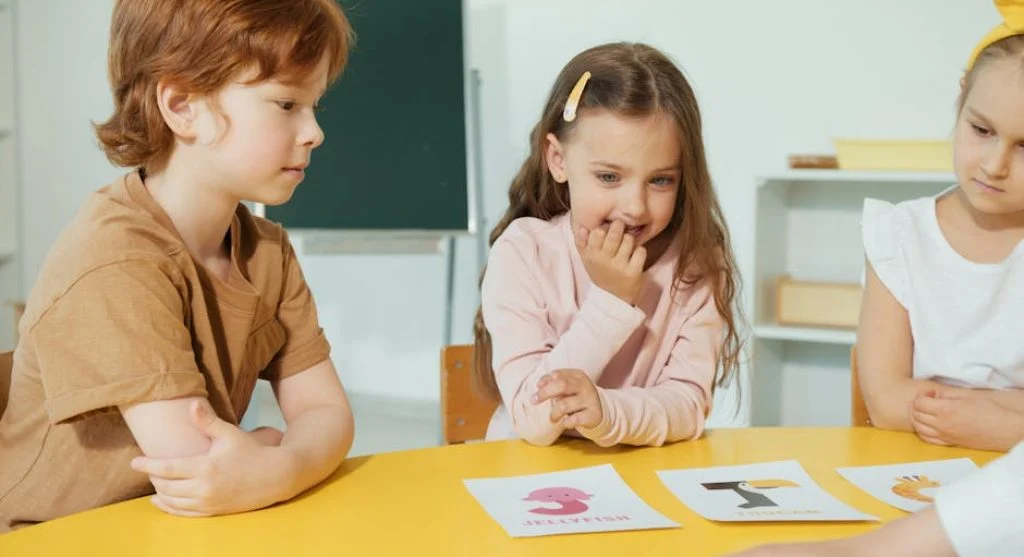
Credit: George Pak / Pexels
Improvement Usually Comes Gradually
Kids don’t usually stop interrupting completely at once. They might get better at not interrupting when things are calm, but still do it when they are very energetic, sleepy, or having a lot of feelings. This kind of stop-and-start improvement is what you’d expect. Being able to have a conversation involves a lot of different things growing at the same time. More important, in many cases, is if your child is slowly starting to understand about taking turns in a conversation, being able to wait a bit longer for their go, and responding to you when you point something out or give a little help. These little steps normally show their ability to communicate is getting stronger, even if they still break in a lot.