
Why Children Often Start Homework More Easily When the Pencil Is Already Touching the Paper Before the First Question
Homework resistance often looks bigger than it really is. Parents may hear groaning, see stalling, or watch a child drift around the table without starting anything at all. It can seem like the child is refusing the whole task. Yet in many cases, the hardest part is not the worksheet, the reading page, or the math itself. The hardest part is the tiny gap between sitting down and making the first mark. Education specialists generally note that children often start homework more easily when the pencil is already touching the paper before the first question because the body has already crossed the barrier that the mind was resisting.
This matters because many children get stuck at the point of initiation. They may know how to do the work, or at least some of it, but still struggle to begin. Development guidance often suggests that small physical actions can help a child enter a task before worry, distraction, or avoidance fully take over. A pencil already resting on the page can make homework feel less like a giant demand and more like something that has quietly begun. Over time, that small change can reduce after-school battles and make work time feel easier to enter.
The Beginning of Homework Often Carries More Stress Than the Work Itself
Adults sometimes judge homework difficulty by how long the assignment is or how advanced the material seems. Children often experience difficulty differently. The very start of the task can feel unusually heavy because it asks them to stop one part of the day, shift into another, and risk finding out that something may feel hard. That emotional load can gather before a single answer is written.
Child development specialists generally explain that starting is a separate skill from continuing. In many homes, a child who resists the first minute of homework may do reasonably well once the assignment is actually underway. The problem is often activation, not total inability.
A Pencil on the Page Creates a Physical Bridge Into the Task
When the pencil is already touching the paper, the homework moment changes shape. The child is no longer only thinking about starting. The child is physically positioned to begin. That matters because bodies often move into action more easily than minds move into intention. The small contact between pencil and paper can act like a bridge across hesitation.
Family learning experts generally note that children often do better when the first action is smaller than the whole task. In many homes, touching pencil to paper feels manageable even when “start your homework” feels large and emotionally loaded.
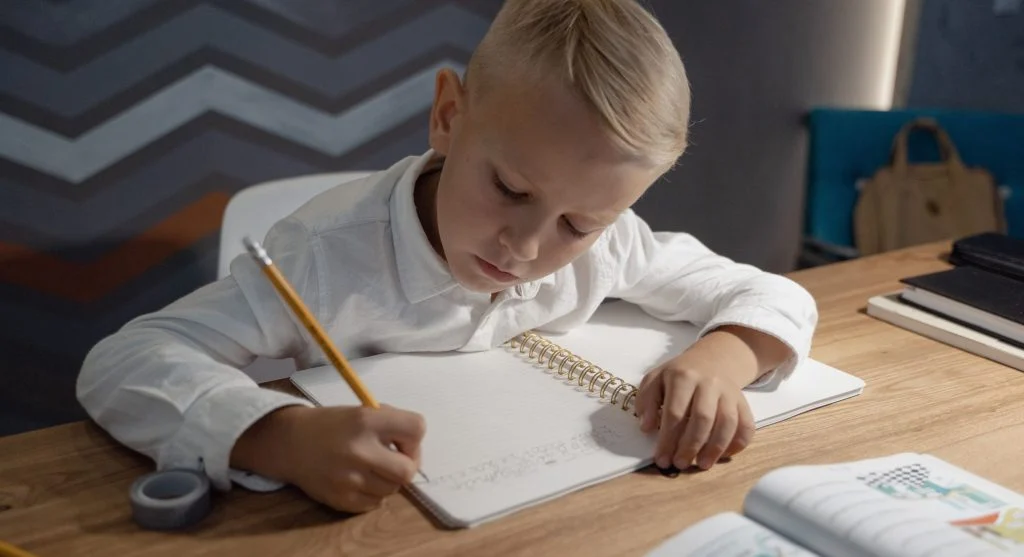
Children Often Resist the Blank Space More Than the Assignment
A blank page can feel more demanding than adults expect. It asks the child to create the first move without any momentum already in place. Even on printed homework, the first unanswered line can feel like a small cliff. Once that blankness is crossed, the task often becomes more ordinary. The page is no longer untouched. The child is already participating.
Development specialists generally note that blank spaces can trigger hesitation because they hold uncertainty. In many families, the first tiny mark, underline, number, or traced word changes the emotional tone of the whole page. It is no longer waiting in silence for the child to prove something.
Small Physical Starts Can Quiet Overthinking
Some children overthink homework before it begins. They may wonder whether the work will be hard, whether they remember the instructions, whether they might get something wrong, or whether the whole session will take too long. These thoughts can pile up quickly. A small physical starting action can interrupt that mental buildup. The child is no longer only imagining the task. The child is inside it.
Child behavior experts generally explain that action often weakens avoidance better than long discussion. In many homes, homework gets easier once the child makes contact with the page before the mind has time to spin into resistance.
Starting With Contact Often Makes the First Question Feel Smaller
Parents often say, “Just do the first question,” which is sensible advice. Yet even the first question may still feel like too much if the child has not entered the task physically. A pencil already touching the page makes the first question seem closer and more reachable. The child is not looking at it from a distance. The child is already right there.
Education specialists generally note that children engage better when the first demand is narrowed as much as possible. In many homes, pencil-to-paper contact works because it makes the first response feel like a short next move instead of a full formal beginning.
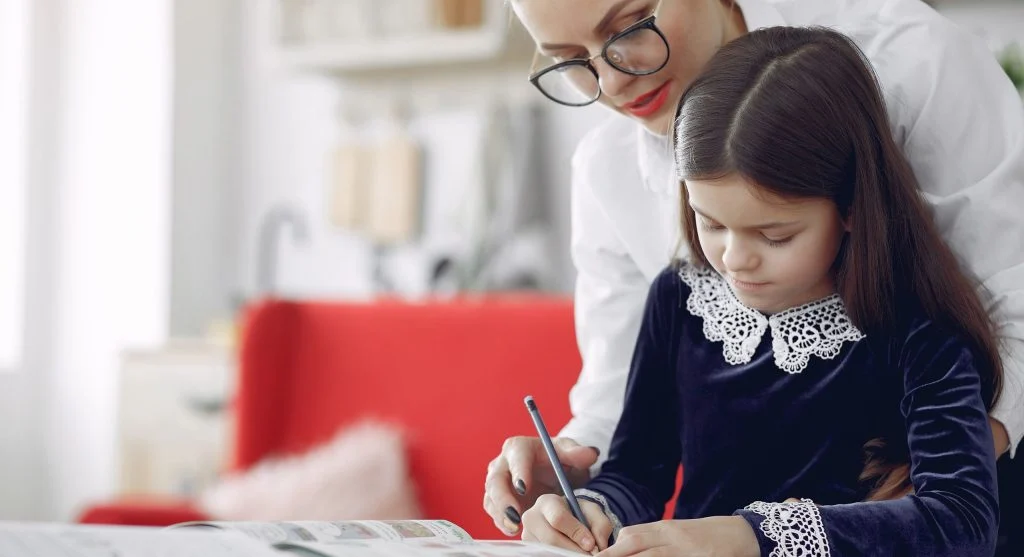
This Strategy Can Help Children Who Drift, Delay, or Freeze
Homework resistance does not always look dramatic. Some children complain loudly, but others simply drift. They sharpen the pencil twice, arrange papers, look around the room, ask unrelated questions, or sit still without moving. These patterns often come from the same difficulty: the child has not yet crossed into the task. A simple physical start can help all three types of children — the loud resister, the quiet freezer, and the drifting delayer.
Development guidance often suggests that initiation supports should match the child’s actual sticking point. In many homes, touching pencil to paper is enough to move the child from hovering around the task into genuinely beginning it.
Parents Often Sound Calmer When the Start Is Practical Instead of Verbal
Adults can become frustrated when the child remains stuck at the same starting point every day. That frustration often leads to more reminders, more explanation, or sharper tone. A practical physical routine can lower that tension. Instead of saying “start” over and over, the parent can help create the first action quietly and directly. That usually sounds calmer and feels more useful.
Parenting specialists generally note that children respond better when adults guide the beginning of a hard task with structure instead of repeated pressure. In many families, the emotional tone of homework improves once the routine includes a simple physical start rather than a long verbal struggle.
The First Mark Builds Momentum for the Next One
Children often need evidence that they can move forward before they actually feel willing to move forward. Once the pencil touches the page and one mark is made, the task often stops feeling stuck. A number can follow a line. A word can follow a letter. A sentence can follow a prompt. Homework shifts from “not started” into “already in motion,” and momentum begins doing some of the work that motivation could not do alone.
Family learning experts generally explain that children often work better after the first visible sign of progress. In many homes, that first tiny mark matters more than adults expect because it changes the child’s relationship to the entire assignment.
This Does Not Solve Every Homework Problem, But It Changes the Entry Point
Some assignments are genuinely difficult. Some children still need help with reading, math, writing, or attention after they begin. A physical start does not replace teaching or support. What it often does is remove the first unnecessary barrier, allowing parents and children to find out what the real difficulty is. Once the task has started, adults can see more clearly whether the child needs encouragement, instruction, or just a little more time.
Child development specialists generally explain that good support often begins by identifying whether the problem is starting, understanding, or continuing. In many homes, a pencil-on-paper start reveals that the biggest obstacle was initiation all along.
Over Time, This Kind of Start Can Build More Independence
Some adults worry that helping a child begin physically will create dependence. Often the opposite happens. Repeated successful starts can teach the child what starting feels like. Eventually, many children begin recreating the routine themselves. They sit down, place the pencil on the page, and enter the work with less emotional delay than before. What started as adult support becomes a self-starting habit.
Development specialists generally note that independence often grows from repeated structured success. In many families, this small homework habit becomes one of the earliest ways children learn how to launch into work even when they do not immediately feel like doing it.
Why Children Often Start Homework More Easily
Children often start homework more easily when the pencil is already touching the paper before the first question because the body has already crossed the hardest early barrier into the task. That small physical step reduces blank-page hesitation, weakens overthinking, and makes the first response feel more reachable. The assignment may still require effort, but the child is no longer standing outside it.
In many homes, smoother homework does not begin with bigger speeches about responsibility. It begins with a better first move. Over time, this simple physical starting habit can reduce after-school resistance, improve confidence, and make homework sessions calmer for both children and parents.
FAQ
Why does pencil-to-paper contact help children start homework?
Because it creates a small physical beginning that helps children move from hesitation into action without needing to solve the whole emotional challenge of starting all at once.
Does this mean the child is lazy if they need help starting?
No. Many children struggle with initiation, which is different from effort or ability. They may work much better once they are actually underway.
Can this help with both writing and math homework?
Yes. It can help with many kinds of assignments because the benefit comes from easing the start, not from one subject alone.
Will children always need this support?
Not usually. Many children begin with physical support and later turn it into a more independent starting habit on their own.
Internal Linking Suggestions
Link this article to posts about homework resistance, after-school routines, helping children start difficult tasks, building school-night habits, and reducing stress around home learning.
Key Takeaway
Children often begin homework more easily when the pencil is already touching the paper before the first question. That tiny physical start can remove the biggest emotional barrier. Many children resist the blank beginning more than the assignment itself. Families often notice calmer homework sessions when the first step is small, practical, and already in motion. Over time, this simple habit can help children build stronger self-starting skills and reduce resistance around schoolwork at home.