Why Children Often Follow Morning Routines Better When One Adult Phrase Starts Every Step
Morning routines often become stressful not because children refuse every task, but because the routine changes shape too often while everyone is trying to move quickly. A child may hear one kind of reminder for getting dressed, a different kind for brushing teeth, and another for putting on shoes. Parenting and child development specialists generally note that children often follow morning routines better when one adult phrase starts every step because repeated language makes the routine easier to recognize, easier to trust, and easier to act on. In many homes, the problem is not only the number of morning tasks. It is the amount of new language children must keep processing while they are still waking up.
This matters because mornings often place heavy demands on attention, memory, and emotional regulation. Children may still feel sleepy, slow, hungry, or distracted while adults are already thinking about the clock. Development guidance often suggests that repeated routine language can lower mental load by giving children a familiar verbal cue that means the next step is beginning. Over time, one repeated phrase can make mornings feel more orderly, reduce repeated arguing, and help the whole household move out the door with less stress.
Children Often Respond Better When the Routine Sounds Familiar
Adults often change their wording without noticing. One morning they may say “Come on, get moving,” and the next they may say “It is time to head upstairs” or “Please start getting ready now.” All of these phrases may mean the same thing to an adult, but children often use repeated language as a signal that helps them recognize what is happening. When the opening phrase stays the same, the child usually has less work to do figuring out the message.
Child development specialists generally note that familiarity supports cooperation because children do not have to decode every instruction from scratch. In many homes, a repeated phrase becomes part of the routine itself. The child starts responding not only to the adult voice, but also to a verbal pattern that has become familiar enough to trust.
One Repeated Phrase Can Lower Morning Mental Load
Mornings often include several linked tasks in a short amount of time. Children may need to wake up, get dressed, eat, brush teeth, gather school items, and move toward the door before they are fully alert. If every step comes with different words, extra reminders, and changing emotional tone, the routine can feel heavier than adults expect. A repeated starting phrase can reduce this burden by making each transition easier to recognize.
Family routine experts generally note that children often handle routines better when adults reduce unnecessary variation. A simple repeated phrase can serve as a stable cue across different morning tasks. In many homes, this helps because the child’s energy can go toward doing the task instead of constantly interpreting the wording around it.
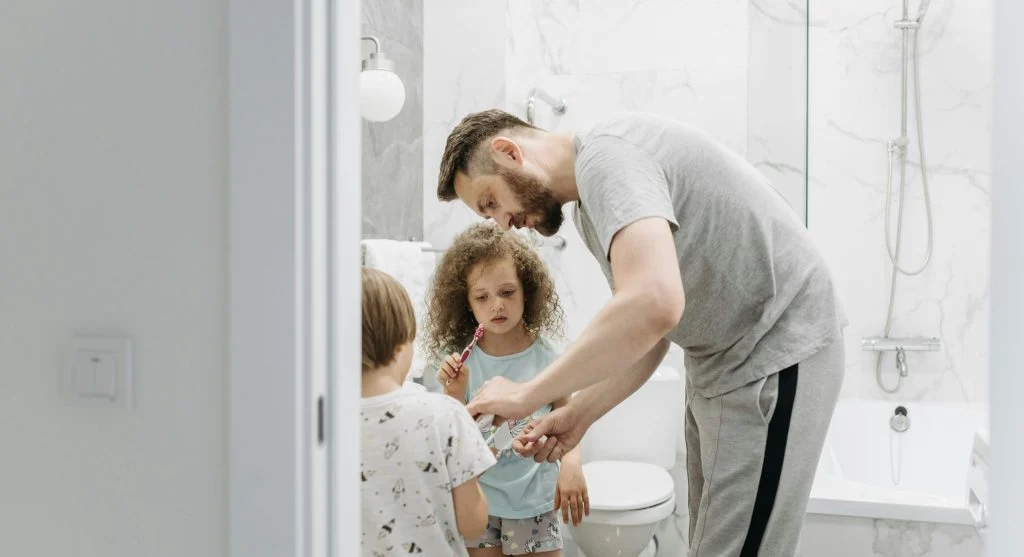
Children Often Move Faster When the Cue Means “Start Now”
One reason routines drag on is that children may not always realize which adult words are casual and which ones mean the next step truly begins now. If language shifts too much, the child may keep waiting, hoping for more time, or assuming the reminder is not yet the real signal. A repeated phrase helps because it can become closely linked with immediate action.
Development specialists generally explain that children use repeated cues to organize behavior. In many families, one steady phrase becomes the marker that the routine is moving forward now. The child may still need support, but often starts more readily because the phrase has already been learned through repetition.
Repeated Language Often Helps Transitions Feel Less Abrupt
Morning tasks require frequent transitions, and transitions are often where cooperation breaks down. A child may be halfway through breakfast, still thinking about play, or drifting through a sleepy moment when the next demand arrives. A repeated phrase can soften these shifts because it makes the transition feel familiar rather than abrupt. The child hears the same beginning and recognizes that another routine step is now arriving.
Family communication specialists generally note that children regulate better when transitions come with recognizable signals. In many homes, repeated routine language helps children move from one morning task to the next with less surprise and less resistance because the verbal cue feels stable enough to rely on.
Adults Often Stay Calmer When the Language Stays Simple
Morning stress does not affect only children. Adults often become sharper, louder, or more repetitive when the routine slows down. One advantage of using the same phrase regularly is that it can help adults stay more consistent too. Instead of inventing new wording under pressure, the adult returns to a familiar cue that already belongs to the household routine.
Parenting specialists generally note that children respond strongly to adult tone as well as to adult words. In many homes, a repeated phrase makes adults sound steadier because they are not searching for new ways to push the routine along. That calmer delivery often helps children cooperate more than louder or more complicated reminders do.
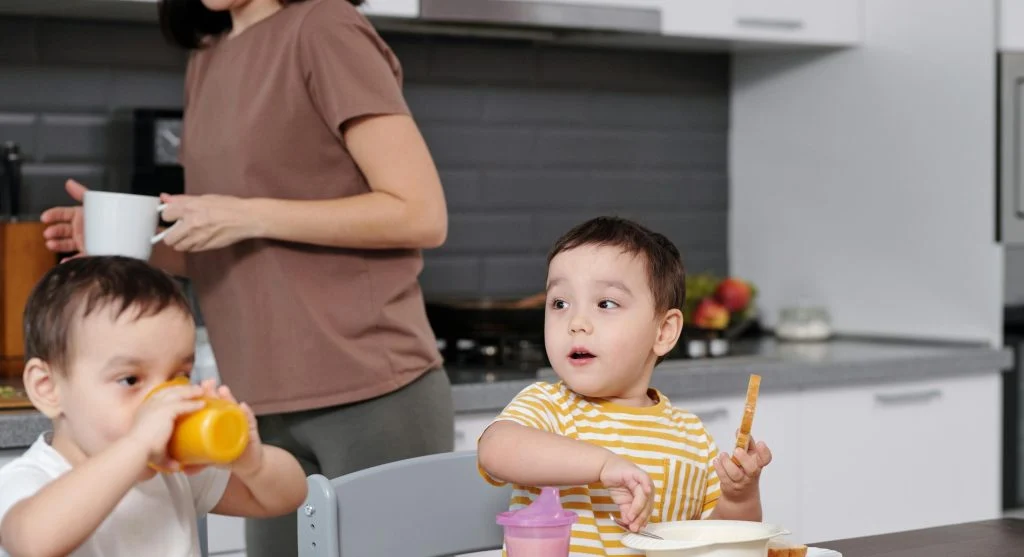
Children Usually Build Routine Memory Through Repetition
Most children do not master morning routines because adults explain them perfectly one time. They usually learn through repetition. Hearing the same opening phrase before different routine steps can help build this memory. Over time, the child begins linking that phrase with movement, readiness, and the start of action.
Child development specialists generally note that routine memory becomes stronger when cues repeat often enough to feel automatic. In many homes, children eventually respond faster not because they are being pushed harder, but because the verbal cue has become part of the routine pattern stored in memory.
The Best Phrase Is Usually Short, Calm, and Easy to Repeat
Families do not need a complicated script for this to work. Children usually respond best to short language they can recognize quickly. The most helpful phrase is often one that sounds calm, direct, and simple enough to repeat every morning without becoming emotionally heavy. What matters most is not creativity. It is consistency.
Family routine experts generally note that routines last best when they are realistic enough to use even on hard days. In many homes, a short repeated phrase helps because it survives busy mornings more easily than longer speeches or changing reminders. The simpler the cue, the easier it often is for both adult and child to keep using it.
Repeated Morning Language Often Turns Instructions Into Routine Signals
Children often follow morning routines better when one adult phrase starts every step because repeated language turns each instruction into part of a familiar system. The child hears the phrase and begins recognizing not just the words, but the meaning attached to them through daily use. This helps the routine feel more predictable and less emotionally demanding.
In many families, better mornings do not begin with more reminders. They begin with clearer ones. Over time, one repeated verbal cue can help children move through daily tasks with more trust, more speed, and less confusion because the routine itself has started to sound familiar enough to follow.
Key Takeaway
Children often follow morning routines better when one adult phrase starts every step because repeated language lowers mental load and makes transitions easier to recognize. A short familiar verbal cue can help children know when the next task truly begins and reduce confusion during busy mornings. Families often see calmer and smoother routines when instructions sound more consistent instead of changing every day. Over time, one repeated phrase can turn a stressful morning into a more predictable and workable part of family life.