Why Children Often Need Repeated Practice Before Flexibility Feels Easier
Many adults notice that children can react strongly when something does not happen the expected way. A plan changes, a sibling chooses first, a favorite cup is unavailable, or a routine happens in a different order, and the child may become upset far faster than adults expect. Child development specialists generally note that children often need repeated practice before flexibility feels easier because flexibility is not a simple personality trait.
It is a developmental skill that depends on emotional regulation, attention shifting, frustration tolerance, and repeated experience handling change without feeling overwhelmed. This matters because adults often see the practical side of a change while children often feel the emotional side first. What seems small to a parent may feel much larger to a child whose mind was already organized around one expected outcome. Development guidance often suggests that flexibility usually grows gradually through many ordinary moments of adapting, recovering, and trying again. Over time, these repeated experiences help children respond to change with more steadiness and less distress.
Flexibility Depends on Letting Go of an Expected Plan
Children often find flexibility hard because they are not only asked to accept something new. They are also being asked to let go of what they were already expecting. A child who believed the family was going outside, sitting in a favorite seat, or following a usual order may already feel attached to that version of events before anything has happened. When the plan changes, the loss of the expected plan can feel just as important as the new reality. Child development specialists often note that this is why children may seem to react disproportionately to small changes. The child is often responding to both disappointment and reorganization at the same time. Flexibility asks the child to release one mental picture and build another one quickly, which is a complex task in childhood.
Attention Shifting Plays a Bigger Role Than Adults Realize
Flexibility is closely connected to attention shifting. A child who is mentally fixed on one activity, one expectation, or one preferred way of doing something may need real time to move attention toward something else. Adults often shift more quickly because they have years of practice doing so, but children may still be developing that ability. Development experts generally note that children often appear stubborn when they are really stuck in a transition of attention. The child may hear the new plan and still not be ready to use it yet. Repeated practice with small changes helps because it gives attention more opportunities to learn how to move without feeling as disrupted each time.
Credit: Valeria Ushakova / Pexels
Strong Feelings Can Make Flexibility Harder to Access
Children are usually less flexible when they are tired, hungry, embarrassed, excited, or already emotionally close to a limit. In these moments, even a small change can feel harder to manage because the child has fewer internal resources available. A child may handle a change well one day and react very strongly to something similar the next simply because emotional capacity is different. Child behavior specialists often explain that flexibility is not only about willingness. It is also about regulation. When emotions are already intense, the child may not have enough room left to adjust smoothly. This is one reason repeated supported practice matters. It helps flexibility grow in calmer moments so the skill is more available later when conditions are less ideal.
Children Often Build Flexibility Through Small Changes, Not Big Ones
Flexibility usually develops best through ordinary manageable experiences rather than dramatic challenges. Waiting for a different snack, trying another shirt, changing the order of two small routine steps, or accepting that a sibling chooses first can all become useful practice. These small moments help children discover that change can feel uncomfortable without becoming unmanageable. Development guidance often suggests that smaller experiences matter because they give children repeated chances to adapt successfully. A child who survives many ordinary small changes gradually builds evidence that not every shift in expectation leads to disaster. Over time, this repeated evidence can strengthen the child’s ability to cope with bigger changes too.
Adult Responses Often Shape Whether Change Feels Manageable
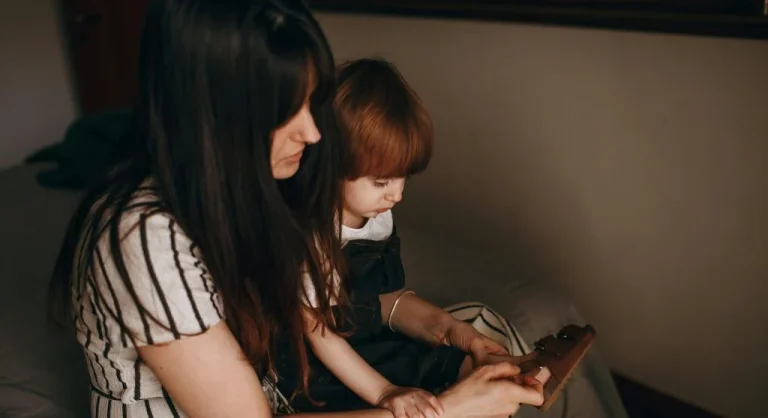
When children struggle with flexibility, adult responses can either steady the moment or make it feel larger. A calm explanation, a clear next step, and a predictable tone often help children feel that the change is disappointing but still safe. A rushed, irritated, or inconsistent adult response may increase the child’s sense that the moment is too big to handle. Family communication specialists generally note that children often borrow emotional organization from adults during difficult transitions. A steady adult presence does not remove the disappointment, but it can help the child move through it more effectively. In many homes, flexibility grows not only from exposure to change, but also from how change is handled around the child.\

Credit: PNW Production / Pexels
Predictable Routines Can Actually Support Flexibility
It may seem surprising, but strong routines often help children become more flexible. When daily life is mostly predictable, children often feel more secure and have more emotional room to handle the occasional change. If the entire day already feels uncertain, even a small shift may become much harder because the child has less stable structure to rely on. Family routine experts often note that flexibility grows best on top of a foundation of predictability. Children are often more able to practice adapting when most of life feels understandable. In this way, routines and flexibility are not opposites. Predictable routines often make flexibility practice more manageable and less threatening.
Progress in Flexibility Usually Appears in Small Signs
Families often hope flexibility will suddenly appear as calm acceptance, but progress usually looks smaller than that. A child may still protest but recover faster, ask fewer repeated questions, or accept the new plan after a short pause instead of a long struggle. These smaller changes often show that flexibility is growing even if change still feels difficult. Child development specialists generally encourage adults to look for these quieter signs of progress. Flexibility is built through repetition, not perfection. In many homes, the child who once could not tolerate small changes at all gradually becomes the child who can adjust with a little support, then with less support, and eventually with much more ease.
Flexibility Often Becomes Easier Only After It Feels Familiar
Children often need repeated practice before flexibility feels easier because change becomes less frightening when it is no longer completely unfamiliar. Each manageable experience of adapting gives the child more memory of what recovery feels like. Instead of meeting every new plan as a brand-new emotional shock, the child gradually begins to recognize that uncomfortable changes can still turn out okay. In many homes, flexibility grows slowly through everyday life rather than through one important lesson. The child learns through repeated experience that disappointment can be tolerated, plans can shift, and the day can still continue safely. Over time, that repeated learning helps flexibility feel less forced and more natural.