Why Children Often Follow Cleanup Routines Better When the Room Has One Clear Finish Line
Cleanup is one of the most repeated stress points in family life. A child may play happily for a long time and then become upset, slow, or argumentative the moment cleanup begins. Parenting and child development specialists generally note that children often follow cleanup routines better when the room has one clear finish line because visible endings make the task easier to understand and easier to complete. In many homes, children do not resist only because they dislike putting things away. They also resist because cleanup can feel endless when the end point is hard to see.
This matters because adults often look at a messy room and instantly know what “clean enough” means. Children usually do not. A toy-filled floor, crowded table, or mixed play area may look like one broad instruction to an adult and one huge confusing task to a child. Development guidance often suggests that children cooperate more steadily when cleanup has a visible goal they can recognize. Over time, clearer finish lines often reduce conflict, build stronger routine habits, and make daily cleanup feel more manageable for everyone in the home.
Children Often Struggle When Cleanup Has No Visible Ending
Adults often say “clean up the room” as though the task is obvious from the start. For children, that phrase may hide many smaller decisions. They must sort items, decide where things belong, notice what still looks messy, and figure out when the work is finally done. If the finish line stays unclear, the child may feel that the task keeps expanding no matter how much effort has already gone in.
Child development specialists generally note that children cooperate better when they can picture success. A task with no visible end often feels emotionally heavier because the child cannot tell whether progress is enough. In many homes, this uncertainty leads to stalling, wandering, and repeated questions because the child is still trying to discover what counts as finished.
One Clear Finish Line Makes the Task Easier to Enter
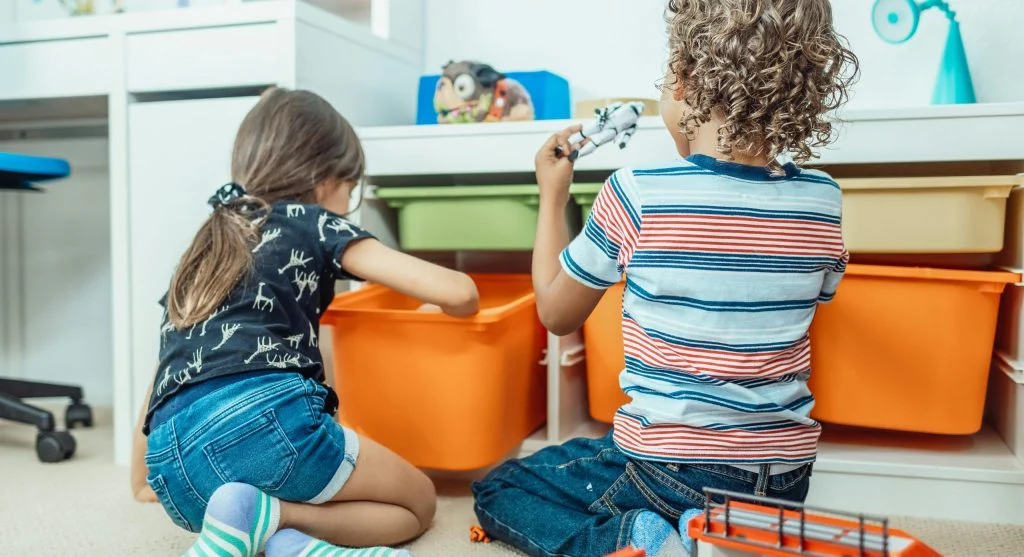
Children often begin more easily when adults make the cleanup goal concrete. A visible finish line might mean all blocks in one bin, all books back on one shelf, the floor clear enough to walk across, or the table empty except for one basket. These kinds of targets are easier to understand than broad instructions about tidiness because the child can see exactly what the room is moving toward.
Family routine experts generally note that children do better when the first step and the end point are both clear. When the finish line is visible, the task often feels smaller even if the room is still messy. In many homes, this changes cleanup from an overwhelming command into a sequence the child can actually begin.
Children Often Keep Going Longer When Progress Is Easy to Notice
Cleanup becomes more manageable when children can actually see that their effort is changing the room. If the adult’s expectation stays vague, the child may feel that nothing is improving fast enough. A visible finish line lets the child notice progress along the way. One shelf looks better. One basket is full. One area of the rug is now clear. These signs can make effort feel more worthwhile.
Development specialists generally explain that children often persist longer when progress is visible. A visible target helps because it breaks the emotional feeling of endless work. In many families, children calm down more quickly during cleanup once they can see the room moving toward one understandable result.
Cleanup Often Feels Fairer When the Goal Is Clear
Many children become frustrated during routines that seem to change halfway through. A child may put many toys away and then hear that the table still looks messy, the books are still crooked, and one basket still needs sorting. Even if the adult is being reasonable, the child may feel that the job keeps growing. A clear finish line can reduce this feeling because the goal is visible from the beginning.
Parenting specialists generally note that children cooperate more when expectations feel fair and stable. In many homes, cleanup arguments decrease when the adult decides the finish line first instead of adding more standards while the child is already working. The child may still dislike the task, but the task feels less uncertain and more contained.
Children Often Need Fewer Decisions During Cleanup
One reason cleanup feels hard is that it often demands many choices in a short time. The child may need to decide what belongs together, where to put oddly shaped items, and what part of the room matters most. Too many choices can create mental overload. A clear finish line reduces that overload because the child is not trying to solve the whole room at once.
Child behavior specialists generally note that children use routines more effectively when the number of decisions is lowered. In many homes, a cleanup goal such as “everything off the rug” or “all dolls in this basket” helps because it narrows the task. The child is no longer organizing the entire room in thought. The child is following one clear target.

Visible Endings Can Help Adults Stay Calmer Too
Children are not the only ones affected by vague cleanup goals. Adults often grow more frustrated when they feel they must keep correcting and redefining the task while it is happening. This can lead to sharper tone, more repeated reminders, and a more emotionally loaded routine. When the finish line is clear, adults often sound calmer because they are guiding toward one stable goal instead of reacting to the whole mess at once.
Family communication experts generally note that calmer adult tone often improves child cooperation. In many homes, the cleanup routine becomes less stressful once adults stop trying to fix every detail in the same moment. A clearer finish line often simplifies the routine for both sides.
Children Often Build Stronger Cleanup Habits When the Room Looks Familiar at the End
Repeated clear endings help children learn what cleanup usually leads to. If the play space regularly ends with books on the shelf, blocks in one bin, and the floor open again, the child begins forming a stronger picture of what the room looks like after play is done. That mental picture matters because habits often grow through repetition of the same result.
Development guidance often suggests that children usually learn routines more deeply when the outcome is recognizable. In many homes, cleanup becomes easier over time not because children suddenly love it, but because they begin recognizing the same ending pattern again and again. The finish line becomes part of the child’s routine memory.
A Clear Finish Line Does Not Mean Perfect Tidiness
Some adults worry that simplifying the endpoint may lower standards. In practice, child development specialists generally note that children often do better with realistic consistency than with perfection that feels impossible. A room does not need to look flawless for the cleanup routine to teach responsibility, order, and follow-through. What matters most is that the child can understand and repeat the goal successfully.
In many homes, better cleanup routines begin when adults decide what the room truly needs in that moment and make that goal visible. Over time, children often become more capable of handling larger responsibilities once the smaller repeated finish lines have built confidence and routine strength.
Children Often Clean Up Better When the Goal Feels Winnable
Children often follow cleanup routines better when the room has one clear finish line because visible goals reduce confusion and make effort feel more manageable. A child who can see what “done” looks like usually has a better chance of starting, continuing, and finishing with less resistance. This often changes cleanup from a vague emotional battle into a task with a real ending.
In many families, smoother cleanup does not begin with more reminders. It begins with a clearer target. Over time, one visible finish line can make the routine calmer, help children feel more successful, and turn cleanup into a more predictable part of everyday family life.
Key Takeaway
Children often follow cleanup routines better when the room has one clear finish line because visible endings make the task easier to understand and easier to complete. Broad cleanup commands can feel endless, while one concrete goal helps children notice progress and stay more cooperative. Families often see less conflict when cleanup expectations are clear from the start instead of changing during the routine. Over time, visible finish lines can help cleanup feel more manageable and more repeatable for children.