How Families Can Build Better Homework Routines Without Making Evenings Heavier
Homework is frequently hard for kids, and it’s not simply the work itself. It’s that it’s assigned in the evening, when they’re already worn out, needing food, or emotionally drained. Families would like to help with learning, but don’t want every afternoon to be a repeat of all the demands of school. A good homework schedule in many houses works by being easier to understand and more likely to happen as expected, not by making evenings even more stressful.
A homework routine that actually works generally doesn’t need someone to be forever checking on the child. Instead it relies on when it is done, where it is done, and a pattern the child gets used to. When studying happens as part of a more steady routine, it tends to feel less like something that will never end, and more like just one thing the family can handle during the evening.
Start by Choosing a Consistent Homework Window
Kids usually do a better job on homework if it’s at roughly the same time each day, instead of being at a different time every day. Some families like a little downtime before starting, while others get it over with earlier to have the rest of the evening clear. What time that is is flexible, but being steady with the time is generally more important than having a perfect plan.
Having the same period of time for homework over and over is helpful because it calms the unknown. If they already know when to expect school work, children won’t be worrying about it all evening or fighting you on every suggestion to get it done.
The Environment Can Reduce More Stress Than Extra Talking
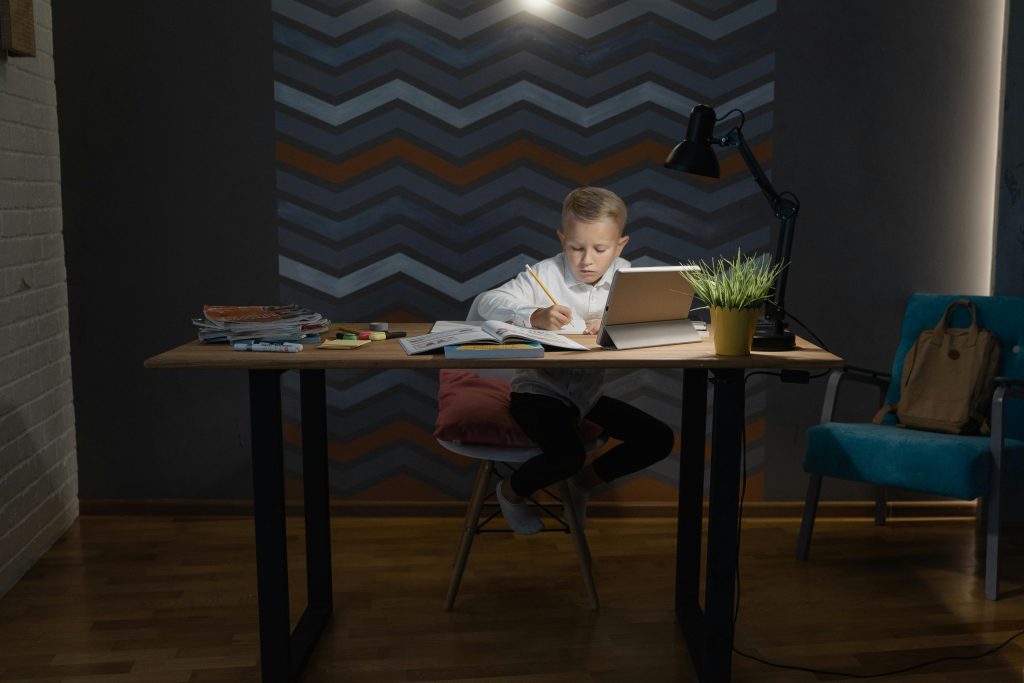
Doing your homework is generally much tougher if you’re surrounded by mess, noise or things that pull your attention away. Families tend to get on with things more successfully when there’s a pretty peaceful place and the things you need for your work are easily at hand. It doesn’t have to be a perfect study room, actually; just a consistent surface to work on and not so much to interrupt you can be sufficient.
Where you are really has an effect because it cuts down on all the little issues which end up causing arguments. For instance, not having a pencil, screens being too loud, or having to move where you’re working can make even straightforward tasks seem much harder.
Credit: Pexels
Children Often Need a Transition Before They Can Focus
Lots of kids when they get home from school aren’t able to immediately settle down and get to work. They benefit from a little time to get back on track after being in school. That could be a snack, a short burst of activity, or even just a few minutes of doing something peaceful before they start their homework.
Families often discover that doing this makes it much easier to get the work done later. It lets children change from “school mode” to “homework mode” rather than being told to do one challenging thing right after another. The point isn’t to put off homework forever, but to help your child be in a better frame of mind to actually do it.
Support Works Better When It Does Not Take Over
Mums and dads generally are keen to pitch in with homework, and particularly when it’s causing their child anxiety, but getting too wrapped up in it can easily lead to endlessly correcting what they’re doing. Kids thrive most of the time if an adult is around to offer encouragement, to listen to them, but not to actually do the work for them or watch their every single move.
Finding this kind of middle ground is what allows children to develop a sense of being in charge of their own things while knowing they’ve got someone backing them. Lots of families, in reality, get on best when the adult is within reach to provide assistance should it be necessary, yet lets the child manage as much of the assignment as they realistically can for their age and stage.
Ending the Routine Clearly Matters Too
When homework goes on and on throughout the evening with no definite finish in sight, it can seem a lot more daunting than it is. Families usually do well to have a specific thing happen after homework is done, to show it’s over: putting the folder away, looking at what’s in the backpack, or transitioning to dinner, or simply free time. This makes the whole homework time feel more defined.
Kids are generally much more successful with school work if they know how it starts and when it will be over. A schedule for it is easier to cope with if it has clear boundaries, rather than being spread all over the evening.

Credit: Pexels
Better Homework Routines Usually Feel Simpler, Not Stricter
Lots of families think they can solve problems with homework by being much stricter about it. But often, what’s really needed is just a straightforward plan. Knowing when homework will happen, having a place to do it that actually works, a quick change from other activities to homework, and a way to clearly see when it’s finished, all calm things down far better than going on and on at kids about being responsible.
For homework plans to be good, they should help with studying but not take over everything else happening at home. And with a more consistent pattern, evenings can feel easier, even if the amount of work from school doesn’t change.
Key Takeaway
Homework goes more smoothly for families when kids know when they’ll do it, where they’ll do it, how they’ll move from one activity to homework, and how homework time will end—basically, if things are predictable. A regular spot in the evening for homework is much easier for children than always wondering when it will be. Also, a gentle bit of encouragement is typically more effective than a parent being all over them. And surprisingly, in a lot of families, less complicated homework routines actually decrease stress more than really firm, rule-filled ones.