Why Children Often Accept the End of Tablet Time More Easily When the Home Screen Is Returned Before the Device Is Taken Away
For many families, the hardest part of tablet time is not the beginning and not even the time limit itself. The hardest part is the final second when the child is still mentally inside the game, video, drawing app, or story platform and the adult reaches to take the device away. That tiny moment can trigger arguments, bargaining, or repeated requests for one more tap. Family media specialists generally note that children often accept the end of tablet time more easily when the home screen is returned before the device is taken away because the activity feels closed before the handoff happens. In many homes, what causes the strongest protest is not only losing the tablet. It is losing it while the child still feels inside the app.
This matters because children usually handle transitions more smoothly when one experience is clearly finished before the next one begins. Development guidance often suggests that returning to the home screen creates a visible reset. The game is no longer active, the video is no longer mid-scene, and the child is no longer holding the most stimulating part of the experience in full view. Over time, this one small routine can make tablet endings feel less abrupt, less personal, and more structured.
Tablet Time Often Feels Unfinished When the App Is Still Open
Adults often think the device itself is the whole issue. From a child’s point of view, the emotional attachment is frequently tied more strongly to what is currently happening on the screen. A paused race, half-finished drawing, active level, or still-playing video can make the moment feel open and incomplete. If the device disappears while that experience is still visually alive, the child may feel pulled away from an unfinished world.
Child development specialists generally explain that children often react more intensely to interrupted engagement than to the abstract idea of a time limit. In many families, the struggle at the end of screen time is really about unfinished mental closure rather than simple resistance to adult authority.
The Home Screen Acts Like a Clear Ending Marker
When the tablet is returned to the home screen, the specific activity ends in a visible way. The child can see that the race is over, the app is closed, the video is gone, and the screen has returned to a neutral place. That visual reset matters because it changes the emotional meaning of the handoff. The tablet is no longer being taken while something exciting is still happening on it.
Family routine experts generally note that children benefit from endings that can be seen, not only explained. In many homes, the home screen becomes a useful transition marker because it signals that the activity itself has already finished before the device changes hands.

Children Often Let Go More Easily After the Most Stimulating Visuals Disappear
Games, apps, and videos are designed to hold attention. Bright motion, sound, reward cues, and unfinished goals all make it harder to stop. The home screen is usually far calmer than the active content. Once the tablet returns there, the most gripping part of the experience has been removed. That often lowers the emotional pull to keep going for one more moment.
Development specialists generally explain that transitions become easier when the child is no longer staring at the exact thing being lost. In many families, tablet time ends more smoothly because the home screen removes some of the emotional intensity before the adult asks for the handoff.
This Small Step Can Reduce Last-Second Bargaining
A great deal of screen-time conflict lives in the final few seconds. “Wait, I was almost done.” “Let me just click this.” “I only need one more second.” “I was about to finish.” These protests make sense when the child can still see the active app and imagine immediate continuation. Returning to the home screen first weakens that feeling. The next move is no longer one more game action. The activity has already been exited.
Parenting specialists generally note that children bargain less when the visible path back into the activity has already been interrupted. In many homes, the home-screen routine helps because the most tempting doorway back into the app is no longer open.
It Helps the Child Participate in the Ending
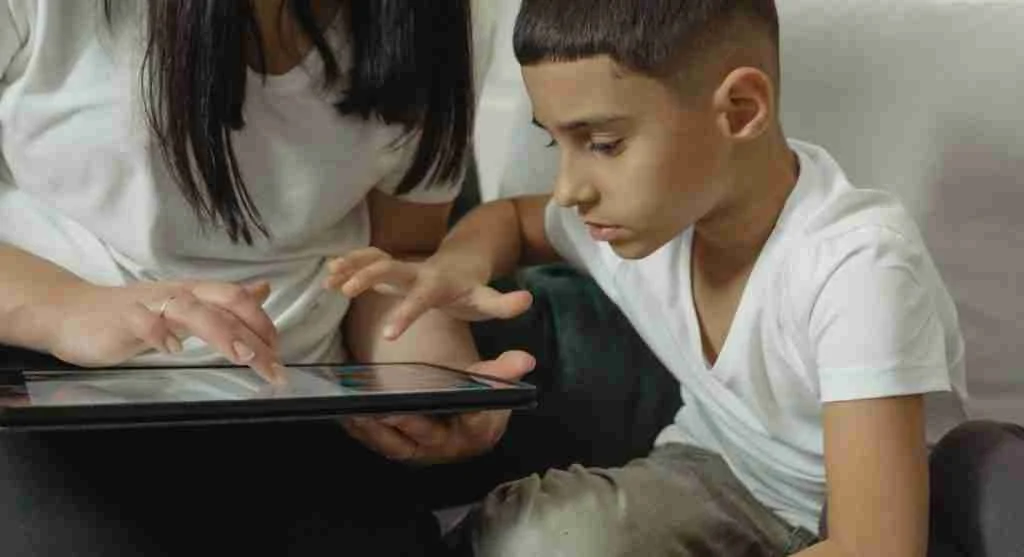
One reason this habit works well is that it can be done with the child rather than only to the child. The adult can guide the child to close the app, return to the home screen, and then pass over the device. That sequence gives the child a role in finishing the session. The ending becomes a shared procedure instead of a sudden adult grab.
Family communication specialists generally note that children often accept limits more calmly when they are allowed to help complete the transition. In many families, returning to the home screen gives the child a small but meaningful part in how tablet time ends.
The Home Screen Creates a Pause Between Use and Removal
Without a transition step, tablet time can end as one emotionally loaded motion: active content, then removal. A home-screen routine adds a pause in between. That pause matters. It creates a short middle stage where the child is no longer actively using the app but is not yet fully separated from the device. This brief in-between space often helps the nervous system shift more gradually.
Child behavior experts generally explain that children often regulate better when intense activities do not end in a single abrupt cut. In many homes, the home screen serves as a softer landing between digital immersion and the next real-world task.
This Can Make Shared Devices Feel More Like Family Tools and Less Like Personal Worlds
Tablets often feel highly personal while in use. The child touches, controls, and inhabits the screen so fully that it can temporarily seem like a private world. Returning to the home screen before handoff gently reminds the child that the tablet also belongs to a larger household routine. It is not staying inside the child’s app-world. It is returning to neutral family space.
Development guidance often suggests that children manage shared devices better when the boundary between personal turn and family ownership stays visible. In many homes, the home screen helps re-establish that boundary before the tablet is put away.
Parents Often Stay Calmer With a Repeatable Script
This routine can help adults just as much. Endings often go badly when parents improvise in frustration. They repeat warnings, reach suddenly, or respond sharply to the child’s protest. A simple script — finish, return to home screen, hand over tablet — gives adults a steadier structure to rely on. That usually improves tone and lowers the chance of last-second escalation.
Family routine experts generally note that repeated, predictable endings reduce stress for both adults and children. In many families, the home-screen habit works partly because it gives parents a calmer, more organized way to end digital time.
This Does Not Remove Every Feeling About Screen Time Ending
Children may still be disappointed when tablet time is over. A home-screen routine does not erase that reality. Some children will still wish for more time, especially after highly enjoyable content. What often changes is the sharpness of the final moment. The child is no longer being separated from an active visual reward at the exact second of handoff, and that often makes the emotional drop less steep.
Child development specialists generally explain that a good transition does not need to remove every feeling in order to be successful. In many homes, the goal is not perfect cheerfulness. The goal is a calmer, clearer ending that children can move through with less conflict.
Over Time, the Home Screen Can Become a Built-In End Signal
When used consistently, the home screen itself can start carrying meaning. The child learns that returning there means tablet time is wrapping up. That repeated association can become a strong cue. Eventually, some children begin preparing mentally for the handoff as soon as the home screen appears, even before the tablet leaves their hands.
Development specialists generally note that children internalize routines through repeated visible patterns. In many families, the home screen becomes one of those patterns and helps transform screen-time endings from unpredictable battles into more familiar household rhythm.
Why Children Often Accept the End of Tablet Time More Easily
Children often accept the end of tablet time more easily when the home screen is returned before the device is taken away because the active experience feels closed before the handoff happens. The game, video, or app is no longer visually pulling the child inward at the exact moment of separation. That often makes the ending feel more complete, more structured, and less abrupt.
In many families, calmer digital routines do not come only from time limits. They also come from better endings. Over time, this simple home-screen step can reduce bargaining, support smoother handoffs, and make tablet transitions easier for children and parents alike.
FAQ
Why does returning to the home screen help with screen-time endings?
Because it visibly closes the active app before the device is taken away, which makes the activity feel more finished and less abruptly interrupted.
Does this work only for tablets?
No. It can also help with phones or other app-based devices where returning to a neutral screen creates a calmer transition before handoff.
Should parents still give advance warnings?
Yes. Advance warnings can still help, but many children respond even better when the final step includes returning to the home screen before the device leaves their hands.
Will this stop all protests about screen time ending?
Not always, but it often reduces the intensity of the final moment by removing the active content before the handoff happens.
Internal Linking Suggestions
Link this article to posts about ending screen time calmly, device handoff routines, family charging stations, helping children transition out of preferred activities, and healthy digital habits for children.
Key Takeaway
Children often accept the end of tablet time more easily when the home screen is returned before the device is taken away because the most stimulating part of the experience is closed before the handoff begins. This small step can make screen-time endings feel less abrupt, less personal, and more complete. Families often improve digital routines not only by setting limits, but by shaping the final seconds more thoughtfully. Over time, a simple return-to-home-screen habit can make tablet transitions calmer and easier to manage at home.