What Preschool Social Skills Often Develop Before Kindergarten Starts
People usually concentrate on academic skills when getting their kids ready for kindergarten, but experts in how children grow say social skills are just as important for those first years at school. Lots of kids are still figuring out things like sharing, being part of a group and its schedule, dealing with being annoyed, getting into games others are playing, and asking teachers or other adults for assistance when kindergarten starts. These aren’t things a child learns quickly from being told once, but develop slowly with a lot of being with other people.
The CDC (Centers for Disease Control and Prevention) considers how a child behaves in social situations, their ability to play, and emotional growth to be normal stages in their development. And the American Academy of Pediatrics believes being ready for school is about a child’s overall development, not simply a list of what they can do in a school subject. So for parents, social skills at preschool should be seen as a normal and healthy part of growing up, not something you can postpone until they get to school.
Taking Turns Is a Learned Skill, Not an Instant Habit
It’s very typical for little kids to have a hard time with waiting their turn, sharing their things, or being told what to do in a game by another child. During preschool, they’re still learning to control themselves and to understand what other people are thinking or feeling. So, a child might know that they should take turns if they are calm, but when they’re really emotional, it’s much harder.
Those who study child development usually look for improvement, not flawless behavior. If a child can start to stop and think, manage to wait for a little while, or listen to an adult helping them during playtime, they are forming a really important basis for being social. These first steps are the habits that will later help them to be part of things in the classroom.
Joining Group Routines Matters in Early School Settings
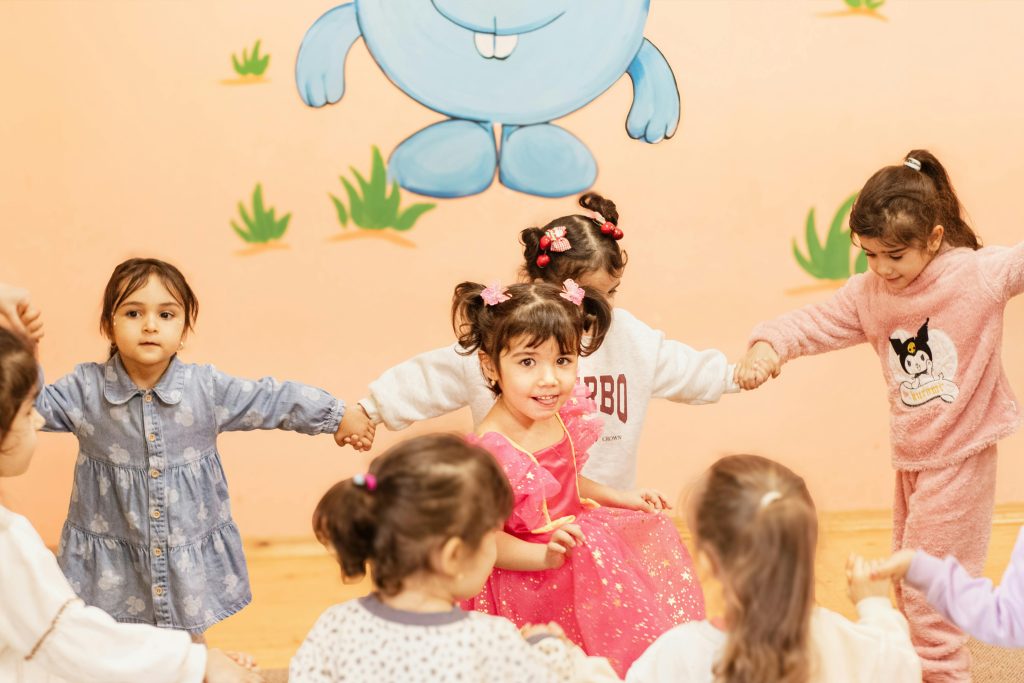
In kindergarten, kids are expected to take part in doing things together – standing in line, tidying up, and listening as a class. Social skills in preschool frequently involve learning to do these same things. They might get their first go at these skills at daycare, in a playgroup, at family get-togethers, or with planned activities at home.
It’s not about being perfect at working with others all the time. What’s more important is slowly getting used to the fact that things start, happen, then finish, and that grown-ups will lead a whole group instead of only one child. This type of being organized as a group is simpler to deal with if children have had a lot of practice with it in relaxed situations.
Credit: Uğur Hamzayev / Pexels
Children Also Learn How to Read Social Cues
Young children are figuring out what faces, how people sound, and what other kids do mean. Understanding these social things is a big part of how little ones grow, and it affects how they act when they’re playing, arguing, or with the teacher and other children at school. If a child begins to realize when another kid is sad, or when a grown-up wants them to be paying attention, they are learning really useful ways to get along.
This learning doesn’t usually happen all at once. Some kids are happy to rush in and be with everyone but don’t pick up on hints. Others are good at noticing things, yet are slower to be involved. People who study children understand they’ll be different in many ways, but they will still be watching to see if a child is becoming more aware of what others are feeling or what they are hoping for.
Asking for Help Is Part of Social Readiness
Lots of families want their kids to be self-sufficient, but becoming social as a young child also means figuring out when to ask for help. A five-year-old starting school might need someone to open something for them, to explain what they’re supposed to do, or to help them with a difficulty with another child. And being able to go to an adult and say what’s wrong is a big step in learning how to get along with others.
Children commonly develop this ability when grown-ups react to their questions without overreacting and help them use easy words to talk about solving their problems at home. “Can you help me?” or “I need a go” are phrases a child can have ready for socializing well before they ever start at school.
Play Remains One of the Best Teachers of Social Growth
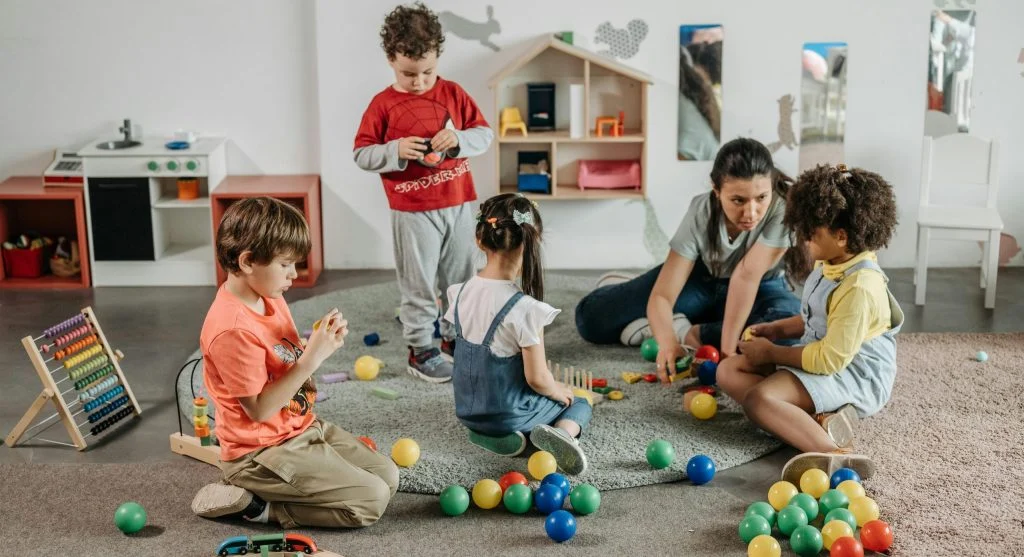
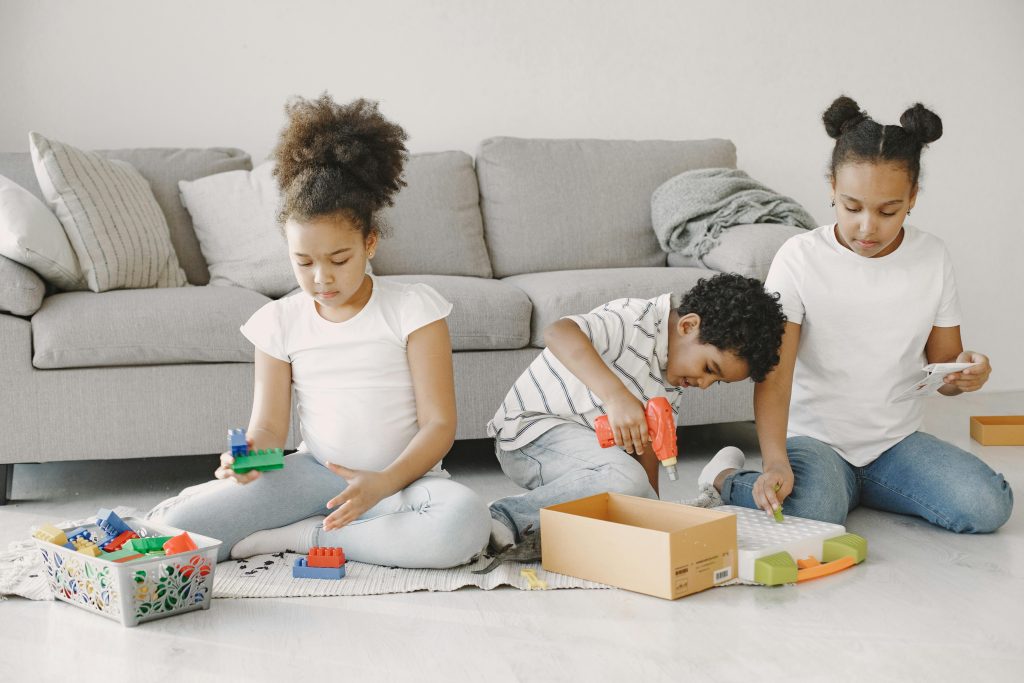
The American Academy of Pediatrics has frequently told us how important play is for a child’s development. When children are pretending, doing things together, or even having little squabbles, they are learning to compromise, to go with the flow, to use their imaginations, and to bounce back from setbacks. Although these situations seem normal, they are really building a lot of what a child will need when they’re at school.
Play is useful because it gives kids a chance to be social, but it doesn’t feel like being taught. They have to deal with rules, with what other people think, with boundaries and with each other, and they have to do it as it happens. This going-over and over of social situations is how their social abilities improve and in a way that being told by an adult very often won’t.
Credit: Gustavo Fring / Pexels
Progress Looks Different From Child to Child
Kids at preschool are all different in how comfortable they are around others. Some happily chat and immediately get into playing with a group, but other children are more careful, don’t say a lot, or take a little longer to get used to being with people. And professionals don’t anticipate all preschoolers being exactly alike. What they’re more concerned with is if a child is gradually becoming more involved in social situations, getting over being upset, and learning to communicate in a basic way.
The social skills for preschool are built up during normal daily life, by doing things over and over, and during play when someone is there to help. These skills are usually as important as starting to learn reading and numbers, since they’re how children actually become a part of their classroom.
Key Takeaway
When kids are in preschool, their social skills are about things like sharing, being part of what the whole class is doing, understanding how other people are feeling or what they want, being able to say when they need assistance, and of course, learning while they play. Most people who know about child development think of these skills as being completely tied to whether a child is prepared for kindergarten, not something separate from reading and math. They grow slowly as children are with others regularly and grown ups help them along. How much a child gets involved in social situations and gets better at it, is often more important than being perfectly polite all the time.