How Turn-Taking Skills Usually Develop in Early Childhood
Adults frequently assume very young children get the idea of taking turns fairly quickly, but it’s a skill that comes along slowly; many families don’t understand that. When kids are little, being able to wait, share, or allow another child to be in charge of something isn’t just about them wanting to be nice. They need to be able to manage their own feelings, use language, have emotional control, and realize that other people have what they want and see things differently. Lots of different growing-up abilities are a part of turn-taking, so it’s something children learn over time, not with one quick explanation.
Families most often find problems with turn-taking during play, at meals, in group things, and when siblings are fighting. What looks like a child being only thinking about themselves is often simply a sign of where they are in their development. Experts in early childhood think turn-taking is built by doing something over and over, by a grown-up helping to manage the situation, and by being in social situations, rather than from simply being told to correct their behaviour.
Why Turn-Taking Is Hard for Young Children
Little kids feel what they want right now. When a toddler wants a toy, someone to play with them, or to go next in a game, it feels really, really important to have it at this very second. They have to be able to put up with being annoyed and believe they will eventually get what they are waiting for. And for kids who are around toddler age and in their earliest years of preschool, even if they understand what you’re saying, managing these needs can be truly hard.
To share and take turns, children also need to think about things from a point of view other than their own. They have to understand that another kid has the toy at the moment, that there’s a sequence to what’s happening, and that being number two doesn’t mean they’re left out. These aren’t simply about doing what’s asked of them; they involve important emotional and social development.
Different Ages Show Different Levels of Readiness
Very young children might manage a really short exchange with someone, and with a lot of help from an adult, but being with other kids at play can still be upsetting. As for preschoolers, they’re starting to be able to have a little patience and wait for their turn in games or things they do, particularly if they know what to expect. When children are nearly at school age, a lot of them are getting better at following the rules when in a group, and can cope with not having something for a little while, although there’s a big difference between kids at this point.
When people who study child development are looking at how things are going, they’re usually interested in how a child is improving over time, not in perfect behaviour. If a child can wait a bit longer than they used to, let an adult comfort them when they’re sad, or bounce back from a problem about turns more quickly, they are learning what they need to.
Credit: Ksenia Chernaya / Pexels
Play Is One of the Main Ways the Skill Develops
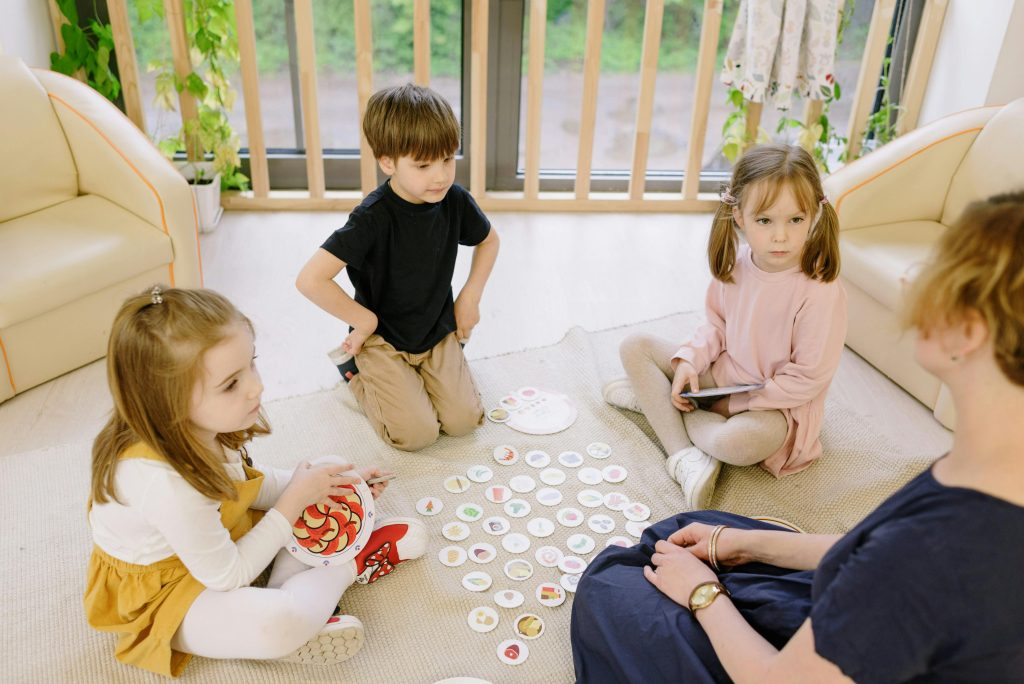
Kids usually learn to take turns best while they’re playing. That’s because playing gives them lots of opportunities to pause, say what they want to do, and come to agreements. Games on a board, a ball tossed between people, having a go on the swings, or making up stories together all give a natural chance to practice this. They might not like it at the beginning, but doing it over and over helps the idea of turns to sink in.
And while they’re at it, play lets grownups help out without it being a strict lesson. A mum, dad or other carer can describe what is happening, gently tell the child when it’s their turn, and help them feel better if they are upset. This kind of help, where they are shown, teaches a lot more than constantly saying what was wrong once an argument has started.
Language Helps Children Manage Waiting Better
Kids usually do better at waiting for their turn if an adult tells them, in really straightforward words, what’s going to happen. Saying things like “First she gets a go, then you,” or “You’ll have it after he’s finished” makes the idea of waiting much easier to grasp. And this is important – a child is much more likely to get upset because they’re confused or feel like they aren’t being heard, not just because they have to wait.
What’s more, as children start to say more themselves, they can start to ask for a turn instead of just snatching or complaining. This change from immediately doing something to being able to talk about it is a big step in learning to be social, and normally things get easier with turn-taking as a result.
Adult Support Is Usually Needed Before Independence
Lots of parents think kids can just figure out taking turns by themselves once you’ve told them what it is. But really, most little ones require a grown-up to help them with it, over and over, before they can do it on their own. Adults commonly help by making sure each turn is quick, being very clear about what will happen, and remaining calm if the child gets upset.
This kind of helping doesn’t hold a child back from doing things independently, it’s how they get to that point. In fact, children usually need to do it with help a great many times for taking turns to work well with friends, at school, or with their brothers and sisters.
Credit: www.kaboompics.com / Pexels
Progress Often Looks Small Before It Looks Steady
Children don’t usually start taking turns smoothly and predictably. One thing they’ll do is wait patiently during one game, but have a really hard time with another. How good a child is at waiting depends on things like how often they do it (familiar routines), whether they are hungry, how tired they are, being very enthusiastic, and how much they want whatever they are waiting for. It’s pretty normal for this to happen with young kids.
Essentially, we’re looking for a child to slowly be able to handle waiting a little better, to use more words, and to bounce back from being upset more easily. If you’re seeing these things, it means they are developing the skills they need, even if they do still have tricky moments.
Key Takeaway
Learning to take turns in conversation or games isn’t something kids suddenly can do. It slowly improves as they learn to manage themselves, use language, handle their feelings, and understand the social situation. Little ones typically require lots of chances to practice during play, and they need adults to help them steadily, before they’re pretty good at it. We usually see improvement in little bits at a time; they’ll wait for a bit longer, start to use words more frequently, or bounce back from being upset more quickly. So, during the preschool years, thinking of taking turns as something they’re developing is more accurate than expecting them to just do it.